More on the Chesapeake Bay’s Blue Catfish Problem
Blue catfish, an invasive species in the Chesapeake Bay, presents environmental challenges in the Bay watershed for a number of native species. Catfish prey on a variety of Bay species, while nothing in our watershed preys on it. Population numbers have grown in recent years, as was highlighted in a post from this summer. (See here).
So what exactly are catfish eating in Bay waters? Researchers at the Smithsonian Environmental Research Center (SERC) are examining catfish stomach contents to find out for sure.
Identifying stomach contents from physical remains, such as bones and scales, and through DNA barcoding, SERC has identified that catfish are eating rockfish, white perch, American shad, alewife and blueback herring. Some of these native species, such as shad and rockfish, have been the target of conservation programs in Maryland and Virginia, as these states try to sustain healthy populations of these finfish.
While shad abundance is up, as of this spring, should population numbers drop below restoration goals in the future, dealing with the catfish issue in the Chesapeake will become even more important.
Oyster Garden Update
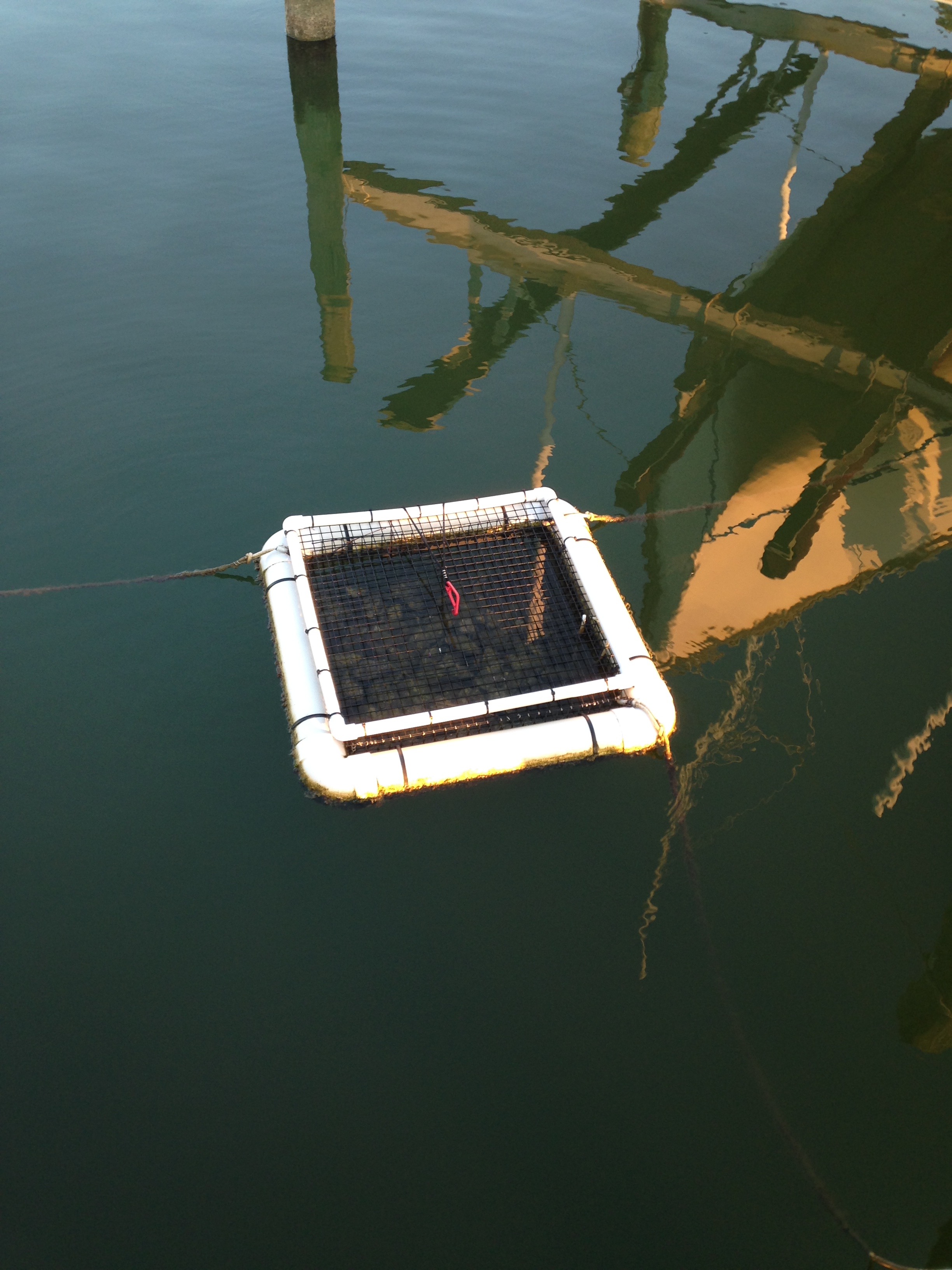
If you’ve been following this blog for awhile, you know that we’ve been growing our own oysters in a floating cage off of our dock on Virginia’s Northern Neck. We started off with 300 quarter-size oysters, placed in a mesh bag, within the cage, last July.
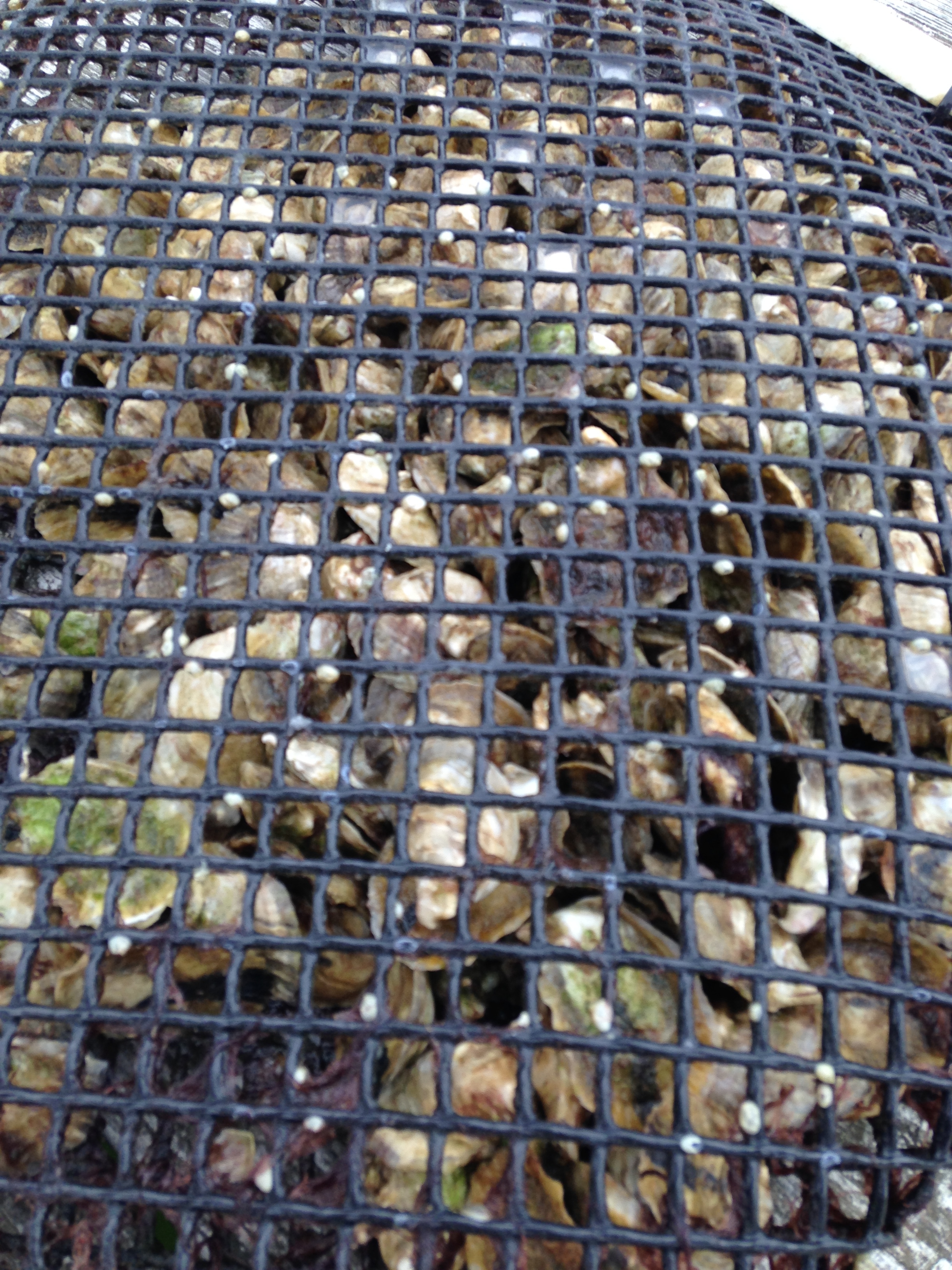
 Three hundred oysters at the beginning of our oyster gardening project. At this size, the oysters have to be placed within a mesh bag, which is placed in the floating cage.
The oysters grew to be large enough to float freely in the cage, and eventually large enough to eat. We cooked the first batch just before Labor Day Weekend this year, opting to bake the first batch (the shells open on their own in the heat). We’ve since learned how to shuck, though!
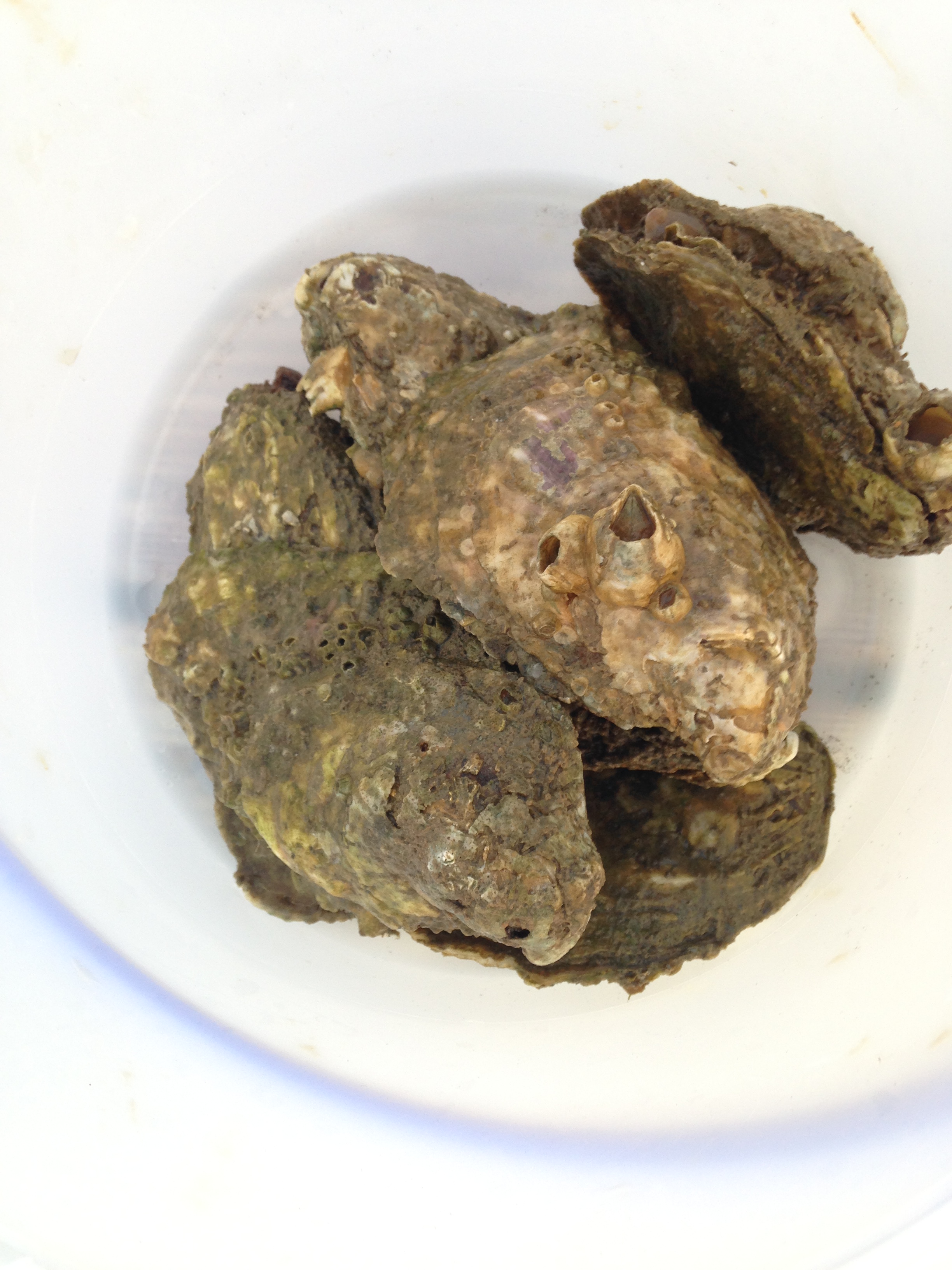


We lost a few oysters to predation- mostly crabs- and with the number that have been consumed, we likely have about 200 left in the cage. Hopefully we’ll be getting some more ‘oyster babies’ soon and starting the process over again.
American Farm Bureau Plans to Bring Chesapeake Bay Case to Supreme Court
This summer we shared the rulings from the Third Circuit Court of Appeals on the American Farm Bureau Federation (AFBF) and allies vs. the Environmental Protection Agency (EPA) and Chesapeake Bay Foundation (CBF). See here.
The most recent ruling from the Third Circuit was the result of an appeal from the AFBF of a lower court decision upholding the legality of the EPA’s Chesapeake Bay Clean Water Blueprint in 2010 (the Blueprint that sets Total Maximum Daily Loads or TMDLs for the Bay states and Washington, D.C.). While all Bay states and D.C. support this Blueprint, and are committed to cleaning up their watershed, pushback is coming from interest groups and states outside of the Bay watershed. These groups originally sued the EPA for overstepping on an issue that they claim should be left up to the states. The EPA argues that it has the right and responsibility to uphold the Clean Water Blueprint under the Clean Water Act. Groups, such as the AFBF, fear that the EPA’s role in the Chesapeake Bay Watershed will set a precedent, allowing the federal government to intervene in the cleanup of other major watersheds around the nation, such as the Mississippi River Watershed. Big agriculture groups fear that they would be a major target of watershed cleanup plans. As such, the AFBF and its allies plan to appeal the Third Circuit court decision, and bring the case before the Supreme Court.
The Environmental Integrity Project Weighs in on Maryland Phosphrous Pollution Problem
The Environmental Integrity Project, a D.C.-based nonprofit which researches and reports on local environmental issues, has weighed in on the phosphorus pollution problem in the Chesapeake Watershed. In Maryland, and especially on the Eastern Shore, there are an excess number of poultry farms. Manure from these farms is frequently applied in excess to farms in the vicinity. While recent legislation in Maryland has begun to address the application of manure, state legislators have done nothing to limit the number of poultry farms in operation, or block the development of additional poultry farming operations.
The Environmental Integrity Project, (EIP), in a recent report, has highlighted that over 200 new poultry farms have been approved on the Delmarva Peninsula, with dozens set to go up in Maryland. The EIP foresees that this will likely “undermine any progress the state might achieve through its June 2015 manure management regulations.” In addition, the EIP has pointed out that, while this poultry operation expansion is going on, the state of Maryland has cut much of its water quality monitoring in and off of the Eastern Shore, due to what they cite as a lack of funds.
Published with the report is an interactive map, showing where poultry operations can be found on the Eastern Shore, where manure is being spread, and where water monitoring cutbacks have occurred. The map and report can be found here.
Weather Station Up and Running
By Gary Greenwood:
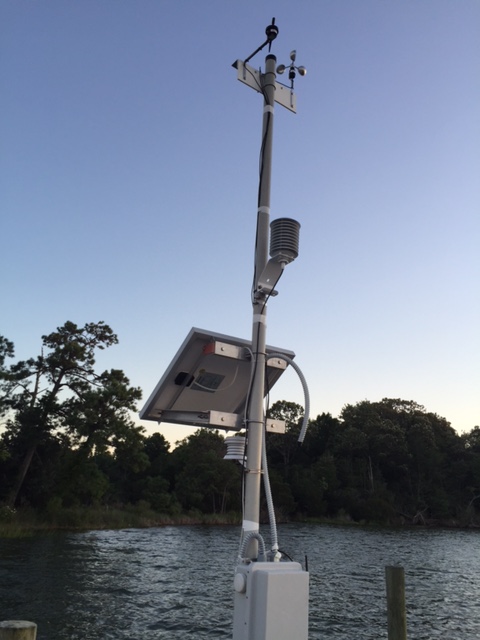
I finally have our custom weather station working on our dock on Antipoison Creek on the Northern Neck. This is a key part of our water-monitoring project. The weather station collects normal weather info, as well as water depth and water temperature. The next step is to add data collection for a variety of water quality metrics, including dissolved oxygen, salinity and PH. By collecting all these values over a period of time, we will be able to look for correlations between the weather and water quality.
This weather station is totally custom, using quality off-the-shelf sensors integrated with custom software running on an Arduino. In addition to storing the data within our internal database, the information is also available on weather underground at KVAWHITE14.
I used a variety of components to build this station:
- Arduino Mega 2560 microcontroller
- Xbee radio to send the info from the dock to a computer in the house
- 30-amp solar panel, since there is no continuous AC power on the dock.
- Genasun charge controller and Panasonic 7.2AH battery to manage and store the solar for nights and shady days.
- Inspeed Vortex II anemometer.
- Inspeed E-vane
- Rotronic HC2-S3 temperature and humidity sensor from Campbell Scientific with 10-layer radiation shield
- Bosch BMP180 Barometric Pressure sensor from Adafruit
- Keller Acculevel water level transmitter, including water temperature
- Apogee SP-212 pyranometer
- Adafruit DS18B20 temperature (backup for the Rotronic)
- It’s all mounted on a two-part fiberglass mast from DXEngineering. The mast is screwed to the dock and one of the pilings.
See picture of the weather station below:
Eating Local Seafood in Virginia and California
By Gary Greenwood
My wife and I are trying to not only eat a lot of fish, but locally caught fish and other seafood. So, in early July we enjoyed a perfect Sunday evening at Merroir, an oyster café in Topping, on the south side of the Rappahannock. The roast oysters were very local, and delicious. We also enjoyed Skate for our main course. Skate (probably Cownose Ray), is fairly common in the Chesapeake Bay in the summer. This one was prepared piccata-style, and it was delicious.

Cownose Rays are not considered invasive in the bay. Unfortunately, they enjoy young crabs and oysters, just as we do. Not many restaurants serve them, perhaps because they are a little hard to catch. We recommend you try it if you do see it on the menu.
Toward the end of July, we headed to northern California for a wedding. We chose to extend our trip in order to enjoy more of the wine and local seafood. We found wonderful local seafood wherever we went. We had a great lunch at Bouchon in Napa, and then headed over to Jenner for a couple of great meals at River’s End, overlooking the point where the Russian River meets the Pacific. Further up the coast we found Mendocino’s Café Beaujolais charming, with delicious food. Perhaps the nicest surprise was recommended by Blake, the river guide from Catch-a-Canoe who took us up the Big River to look at seals and third growth redwoods along the protected shoreline. Blake suggested we try Wild Fish at Little River. There we enjoyed excellent Halibut and Albacore tuna in a dining room with space for only 20 diners.
The biggest surprise was on our last night in San Francisco, when we went to Hog Island Oyster Company on the Embarcadero. In addition to Pacific oysters from five locations along the coast, they had Rappahannock oysters from Topping on the menu. I guess they are popular in San Francisco, since they were sold out that night. It was exciting to see Chesapeake oysters on the menu of a popular oyster-house in San Francisco.

Pound Net Fishing on the Chesapeake
By Gary Greenwood
Antipoison Creek is home to three pound-net fishermen. If you are up early, you can see them heading out to their nets in their iconic Chesapeake workboats. A couple of weeks ago my neighbor, Joe, took me out with him for their morning fishing.
Pound nets are a type of fish weir. A pound net is a collection of nets, set in a fixed location. The nets are set on pine poles driven into soft river bottom. They are designed to herd the fish into a single square net with a small exit hole. I couldn’t find a description of pound nets on Wikipedia, so they may be unique to the Chesapeake. Maryland and Virginia both have websites (see below) with the nets’ locations marked on a map.
We left the dock a couple of minutes after 5 AM. Joe’s nets were set on poles in the Rappahannock River, so we headed east, around Windmill Point, and a short distance up the Rappahannock. By 6 AM we were at the first net, and Joe and his two mates were pulling up the net using the small skiff we had towed out with us.
Ideally, the nets would be full of Croaker as they bring the most money back at the dock. But, not this morning. Mostly they caught menhaden, and not a lot of that. As part of the morning’s catch, Joe also brought in some small flounder, some sugar toads, and a snapping mackerel. These would be sold separately from the menhaden.
As soon as we tied up to the pound net, two local sport fishing boats pulled up and tied up to Joe’s boat. After the fish were brought aboard, they were sorted into bushel baskets, and each of the fishing boats purchased a couple of bushels of fresh menhaden. I think they were headed out to the Windmill Point light where cobia were rumored to be lurking.
As soon as the sport fishermen headed out, a local crabber stopped by to pick up a few bushels of menhaden for his pots. Then we moved onto the second net, and repeated the process. Not as many fish in the second net, and no buyers tied up, so Joe ended up taking several bushels back. Joe sold a couple of bushels to another crabber on his way back to the dock, and the rest were all spoken for. A small group of local residents were waiting to see what he had caught, and they purchased the flounder and other fish.
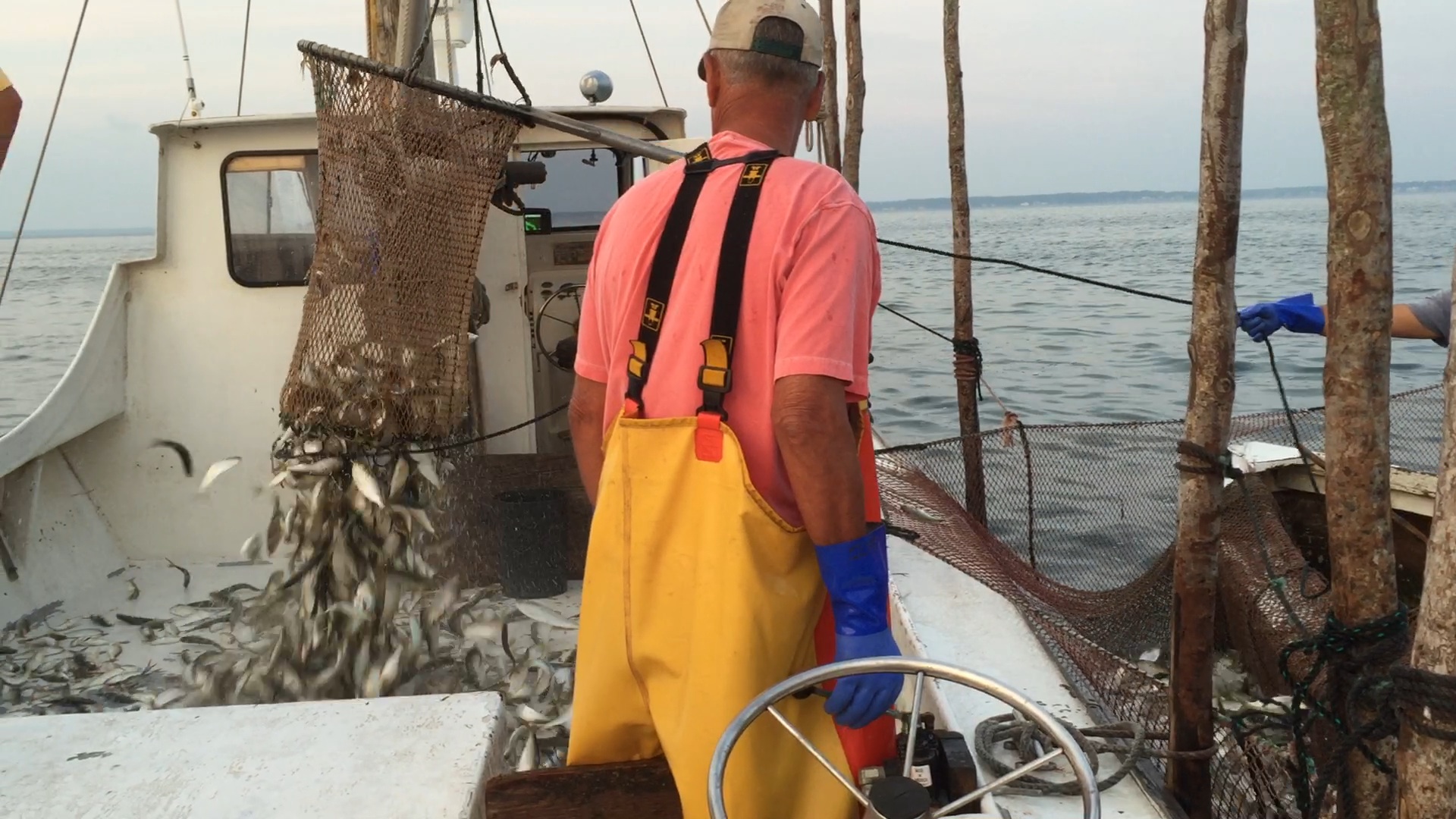


Maps to Chesapeake poundnets are here >> https://webapps.mrc.virginia.gov/public/maps/virginia_poundnets.php and here >> http://dnr2.maryland.gov/fisheries/pages/poundnets/index.aspx.
Lawsuit Invalidates the Often Misunderstood “Rain Tax”
By Neil Saunders
A Montgomery County judge invalidated the county’s so-called “rain tax,” the stormwater runoff fee program used to fund projects that would reduce polluted runoff from contaminating the Chesapeake Bay. While the holding in the case is limited to the county’s program, many anticipate that it will lead to similar decisions in other Maryland counties and the city of Baltimore. The program, which forms part of Maryland’s overall Watershed Implementation Plan to achieve the reductions required by the Bay TMDL, was designed to reduce urban and suburban stormwater runoff that continues to be a leading source of pollution in the Chesapeake Bay. Without the fee program Montgomery County will have to come up with alternative ways to fund its federally and state-mandated Bay restoration programs.
The Water Quality Protection Charge (WQPC), or “rain tax” as opponents label it, has been hotly debated in Maryland since the law was passed in 2012. That law, which mandates stormwater fees in the nine largest counties and the City of Baltimore be assessed to property owners whose land contributes pollution runoff to nearby streams and the Bay, has been opposed by many Republicans and Governor Hogan, who pledged to repeal it during his campaign. The Democrat-led General Assembly, however, refused to repeal the law outright, and instead amended the law earlier this year to remove the fee mandate and permit the counties to decide for themselves how to fund their stormwater management programs. Some counties, including Montgomery County, chose to keep the fee program in place. Other counties are required to demonstrate how their stormwater management programs will be funded in the absence of a fee program.
The WQPC was created as part of Maryland’s overall strategy for Bay TMDL compliance. In counties that use the fee structures, residential and commercial property owners are assessed annually based on the amount of impervious surfaces on their property. For many homeowners, the fees range from under $30 for Baltimore County to up to $90 for some Howard County residents. Commercial property owners with larger tracts of land that have greater areas of impervious surfaces are assessed larger fees. While the fee structure serves to fund new measures to reduce pollution, it also acts as an economic incentive for homeowners and business owners to take remedial steps to reduce polluted runoff. Additionally, off-set credits are available for individuals or businesses who show that reduction efforts are being taken.
The lawsuit was brought by a commercial developer owner who had been assessed an $11,000 stormwater fee to his 34-acre development. The owner argued that he shouldn’t be assessed any fees because he had built two ponds on his property to collect stormwater runoff from his property, effectively eliminating pollution from reaching the Bay. He also argued that the fee was unlawful under state law. In the lawsuit, the circuit court judge agreed on both issues, holding that the fee was not properly assessed in this case, because it did not fully take into account the remedial actions taken by the landowner (the landowner was only given a 50% credit reduction), and the calculation methodology used by the County did not limit the fee to what the actual services rendered to the property.
The effect of this second point could make it more difficult to manage pollution from stormwater runoff if lawsuits in the other counties and the City of Baltimore reach the same conclusion. While the County was permitted to base its fees on the amount of impervious surface on a property, the circuit court held that the County failed to adhere to the law’s mandate that “a county or municipality shall set a stormwater remediation fee for a property in an amount that is based on the share of stormwater management services related to the property and provided for by the county or municipality.” Env. Art. sec. 4-202(e)(3)(i). Under this provision, the court maintains that a county may charge a fee based on the actual cost of stormwater management services to that property only. In other words, the County is not permitted to use the WQPC to fund other stormwater remediation projects because the law only permits the County to set a charge to cover its costs.
It is not yet clear whether Montgomery County will appeal this narrow interpretation of the law or seek alternative options to fund its stormwater management practices. If this result does extend to the other counties and Baltimore it will likely result in a greatly reduced source of funding for important water quality programs; stormwater runoff remains one of the critical sources of Bay pollution. Hopefully, if similar lawsuits are brought, those courts will apply a much more practicable interpretation of the law, and give the counties the flexibility they require to meet the requirements of the Bay TMDL. Otherwise, the state would have to rely on changes at the legislative level, which is often difficult and moves at a much slower pace.
Chesapeake Bay Foundation Will Not Appeal VA Court Decision
Last month I posted about the Richmond Circuit Court ruling against the Chesapeake Bay Foundation (CBF) in the case of CBF vs. Virginia, (see here). In this case, CBF argued that the Virginia Department of Environmental Quality and the State Water Control Board should have included livestock exclusion from streams in a permit that both agencies passed late last year on land application of animal waste.
The Richmond Circuit Court, after reviewing the Virginia Pollution Abatement Permit in question, decided that given the lack of clarity in the permit’s wording, Virginia’s Department of Environmental Quality and the State Water Control Board were able to make their own call on the issue of livestock exclusion from streams. With this ruling, CBF’s case was rejected. As of last week, CBF has decided not to appeal this decision.
Bay Grass Acreage Up From Last Year
The abundance of total underwater seagrass in the Chesapeake Bay is up 27% from last year. Underwater grasses increased by thousands of acres across all four water ranges (from freshwater, slightly salty, moderately salty, to very salty) in the Bay watershed. There are currently an estimated 75,000 acres of underwater grasses in the Bay, up from 59,711 acres in 2013. The increase in acreage in each salinity zone (amount of salt in the water) is represented in a table below.
While this increase is a vast improvement from previous years, the Bay needs to have an additional 15,000 acres of underwater seagrass to meet 2017 restoration goals, and a further 40,000 acres to meet 2025 goals, set by the Chesapeake Bay Program (CBP). Beyond 2025, the CBP ultimately aims to restore 185,000 acres of underwater grasses in the Bay. Underwater seagrass acreage is gradually increasing in the Bay, but over 100,000 additional acres must be restored to meet CBP standards.
| Zone | 2013 Seagrass Acreage | 2014 Seagrass Acreage | Zone Goal Achievement (%) |
| Tidal Fresh Salinity | 1,320 | 15,305 | 74% |
| Oligohaline Salinity (Slightly Salty) | 1,800 | 7,413 | 72% |
| Mesohaline Salinity (Moderately Salty) | 11,850 | 37,260 | 31% |
| Polyhaline Salinity (Very Salty) | 1,154 | 15,857 | 47% |
Bay grass acreage can fluctuate from year to year, due to die-offs from heat waves or major storms, such as Tropical Storm Lee in 2011. Long-term threats to underwater grasses, which have resulted in decades of declining seagrass abundance in the Bay, include nutrient and sediment pollution. Nitrogen, phosphorus, and sediment runoff from agricultural activity and urban stormwater runoff contribute to the declining health and die-off of Bay grasses.
Underwater seagrass plays an important role in the Chesapeake Bay ecosystem. Seagrass provides habitat and sanctuary to various underwater species, such as juvenile blue crabs and finfish. Grasses are able to improve water quality by filtering runoff in the Bay and taking up nutrients that would otherwise contribute to pollution in the watershed. Seagrass protects shorelines from erosion by absorbing wave energy and keeping sediment in place.
The 16,000-acre increase in underwater seagrass abundance in the Bay between 2013 and 2014 is great news. This is a trend that I hope to see continue in years to come. However, restoration, at levels expected by 2025, will not be possible without the Bay states’ cooperation in implementing and enforcing regulations that reduce nitrogen and sediment runoff into the watershed. While 2014 numbers are an improvement from previous years, Bay acreage will continue to fluctuate in years to come, and the only way to create a long-term positive trend in future seagrass abundance is to significantly reduce nitrogen and sediment pollution in the Bay.

Recent findings on Bay seagrass acreage come from the Virginia Institute of Marine Science (VIMS), which has released their annual report on underwater seagrass abundance in the Chesapeake Bay for 2014, (http://www.vims.edu/newsandevents/topstories/sav_2014_report.php).
For more information on underwater seagrass, please see Part III of our Phosphorus in the Chesapeake paper here: https://beyondthebayblog.com/2015/05/07/phosphorus-in-the-chesapeake-part-iii/.
 Chesapeake Bay environment and water quality blog