The Impact of Ocean Acidification on the Eastern Oyster Population in the Chesapeake Bay
I’m sharing a project I worked on last spring on oyster restoration in the Chesapeake Bay, and the impact ocean acidification may have on the oyster industry in the coming years. Ocean acidification is caused by the uptake of carbon dioxide from the atmosphere, and affects the ability of organisms, such as oysters, to form shells. Acidification has already caused problems for oyster farmers on the West Coast, and could become an issue in our region.
In this project I examined the decline of the oyster population in the past century, looked at the current restoration effort, and researched the potential effect ocean acidification could have on the eastern oyster. I reviewed literature on the issues, including journals, articles and webpages, and then wrote a short reflection piece. Reviews, comments, questions or critiques are welcome.
In the News
Anti-sprawl efforts in Maryland help curb nutrient runoff to Chesapeake by limiting the spread of developments with septic systems; Charles County farmers find fault with limitations (Washington Post).
Maryland Director of Natural Resources Secretary’s confirmation held up (Baltimore Sun).
PA Governor Corbett encouraged to include clean water investments in budget plan that will target stormwater runoff (Public News Service).
Chesapeake Bay cleanup threatened by agricultural lobbyist groups, attorneys general from states outside of Bay watershed over fears that EPA rulings in Bay cleanup efforts could be applied to the Mississippi River Basin and beyond (Washington Post).
The Chesapeake Bay Foundation responded to efforts to derail the Bay clean up (see above link) in a press statement released Tuesday. (CBF Press Statement).
Update on Grasses Restoration Project
I’m working on two projects dealing with the restoration of underwater grasses in the Chesapeake Bay. The first is the Grasses for the Masses program though the Chesapeake Bay Foundation. I planted celery seeds almost two weeks ago and several small shoots have emerged. I’ll continue growing the grasses until it’s time for planting in May.

The second project involves planting grasses in Antipoison Creek, just off of the Chesapeake Bay. I’ve been talking with the National Resources Conservation Service (NRCS) and the Virginia Institute of Marine Science (VIMS) to get this project going. In order to plant grasses I’ll need to get a permit from the NRCS, but research and planning is required before starting the permit process.
I’ve been talking to an expert at VIMS to fully understand the process and methods involved with growing underwater grasses, and figuring out what species of grass to use.
I’m planting celery seeds in Northern Virginia, but when mature, these grasses will be planted on the Potomac River in a region that has lower salinity levels than Antipoison Creek. I’ll work with a species adapted to saltier waters, such as eelgrass or widgeon grass for Antipoison Creek.
Additional questions I have been researching include when to plant, how to plant, where to get seeds or grasses, water depth needed for these plants to survive, and other materials that might be needed for the process. I’m still working on some of these answers, but here’s what I’ve learned so far:
- Eelgrass requires a water depth of about 0.5 to 1.0 meters at mean low water and a tidal range of 80-100 centimeters. This allowed me to determine where to plant off of the shore.
- There are two main methods for growing underwater grasses: planting seeds and transplanting shoots of grass, each has various sub-methods
- The optimal planting time for transplants is late September to early October
- To plant seeds, seeds must be collected from their source in mid-May to early June; planting experiments must be conducted mid-August to mid-October.
I’m still deciding whether to transplant grass shoots or plant seeds, and which specific method to use. I can broadcast seeds by hands, plant seeds via buried burlap bag, transplant bundles of shoots, or transplant single unanchored shoots. Part of this decision will involve figuring out where to get the seeds or grass shoots for planting. I’ll be updating the blog as I learn more.
More on 2014 Farm Bill
Last week I posted a link to the 2014 Farm Bill, as passed by the House of Representatives. Yesterday, the bill was passed by the Senate. The 2014 Farm Bill makes several changes, including cuts in subsidies for farmers, cuts to federal food stamps, and major changes to funding for the Chesapeake Bay Watershed Initiative (CBWI). Congress created the CBWI five years under the previous Farm Bill to fund conservation initiatives for farmers and landowners in the Chesapeake watershed. Funding allows landowners to work with the Department of Agriculture and the Natural Resources Conservation Service to set up stream buffers, restore wetlands, and implement other conservation practices. These measures reduce nutrient (nitrogen and phosphorus) runoff to the Bay, which is the number one problem facing the Chesapeake.
The bill passed yesterday will create a Regional Conservation Partnership Program, of which the CBWI will be a part. The Regional Conservation Partnership Program lumps together four conservation programs, including the Chesapeake Bay and Great Lakes regional programs with the Cooperative Conservation Partnership Initiative and the Agricultural Water Enhancement Program. The Chesapeake Bay Program released a document breaking down the funding for the Regional Conservation Partnership Program, which can be found here: (Chesapeake Bay Program).
Essentially, the new partnership program will force projects within the program to compete with one another for funding. As the Chesapeake Bay Program states, funding is awarded based on a “competitive, merit-based process.” But what criteria are used to merit funding and what happens to the programs that do not receive federal grants?
A press release from Virginia Senator Tim Kaine paints the new Farm Bill as a positive change for Virginia farmers and conservation of the Chesapeake. He claims the bill “ensures robust support for Chesapeake Bay restoration…” (Kaine Press Release).
A story from the Allegheny Front, a radio program from Pittsburgh, PA, gives a different side. Their January 31 story reports that the Regional Conservation Partnership Program will cut billions of dollars to conservation projects, and reduce the number of acres included in these projects. More specific to the Chesapeake watershed, competition could cause projects in the Bay area to lose out to other regions. A loss of money will mean fewer farmers and landowners will have the funds or the incentive to implement conservation practices on their lands, and the heath of the Bay will suffer. (Allegheny Front).
EPA Awards Grants to Research Solutions to Nutrient Pollution
Link Posted on Updated on
EPA Awards Grants to Research Solutions to Nutrient Pollution
Today the EPA announced that it would be granting $9 million to 3 universities and the Water Environment Research Foundation to research solutions to nutrient pollution. Stormwater runoff, which has been in the news frequently in the past few weeks (at least in the Chesapeake Bay watershed regions) will be a major focus. One of the schools awarded funds is Pennsylvania State University. Their research will concentrate on Pennsylvania waters and the Chesapeake basin.
Frozen Potomac River
Image Posted on Updated on
The Potomac River was partially frozen over today, here in Northern Virginia.
Chesapeake Bay Watershed Agreement
The Chesapeake Bay Program (CBP) has released their final draft of the Bay Watershed Agreement. The agreement is a result of a partnership between states and the District of Columbia, in the Chesapeake watershed, to protect and restore the Bay. A draft report is published every January detailing goals and expected outcomes for the year to come. CBP allows for public comment from now until March 17.
Chesapeake Bay Program Draft Watershed Agreement 2014
2014 Farm Bill con’t
Link Posted on Updated on
I’ve posted the link to the 2014 Farm Bill as passed by the House of Representatives (titled the Agricultural Act of 2014).
Farm Bill 2014
I’m looking forward to hearing more about the Farm Bill which is up for vote tomorrow:
A Snowy Weekend on the Creek
It was a snowy, cold weekend in the Northern Neck. Antipoison Creek and our tidal ponds partially froze over Sunday morning. My family was there to take some photos: 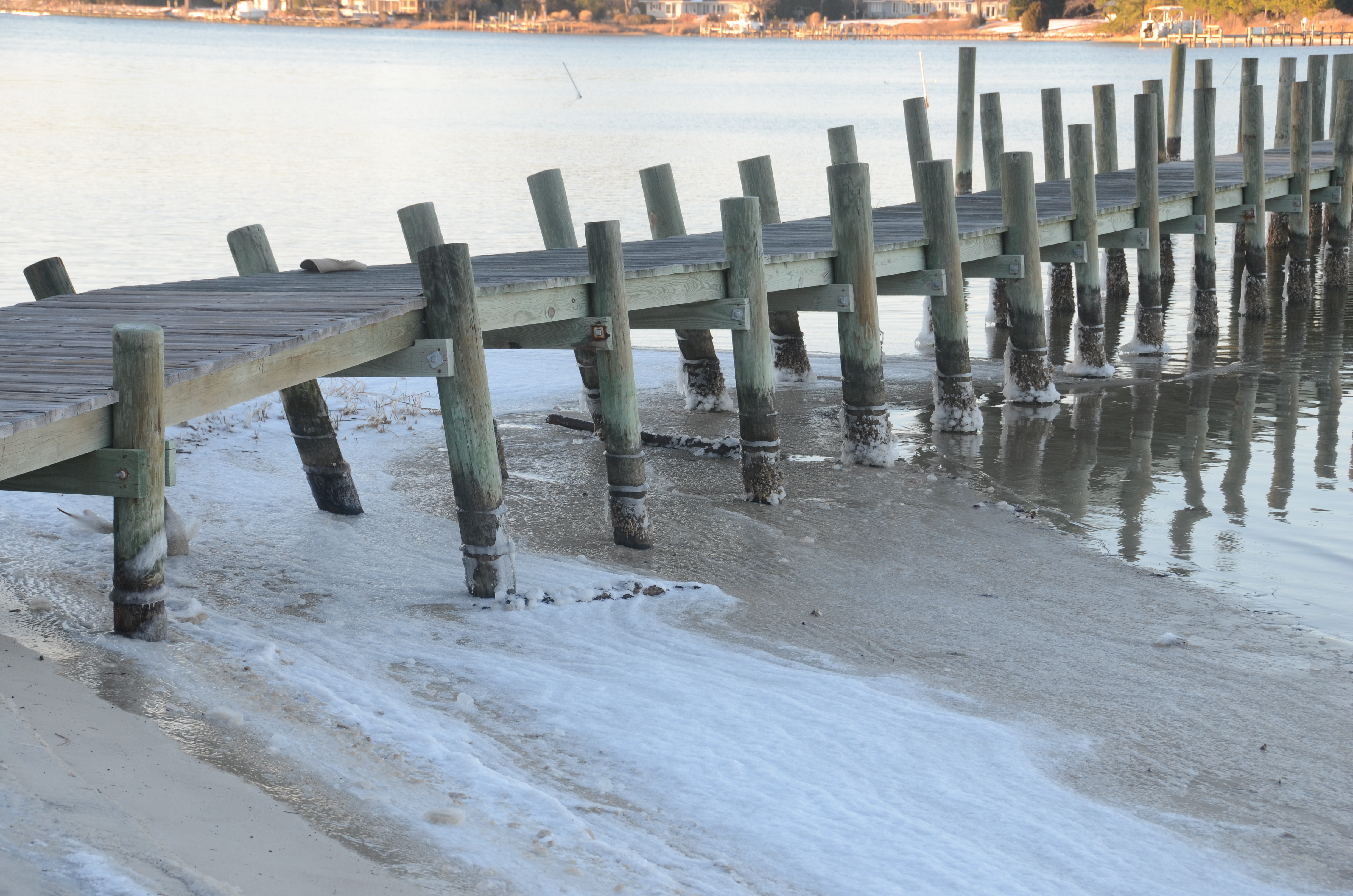

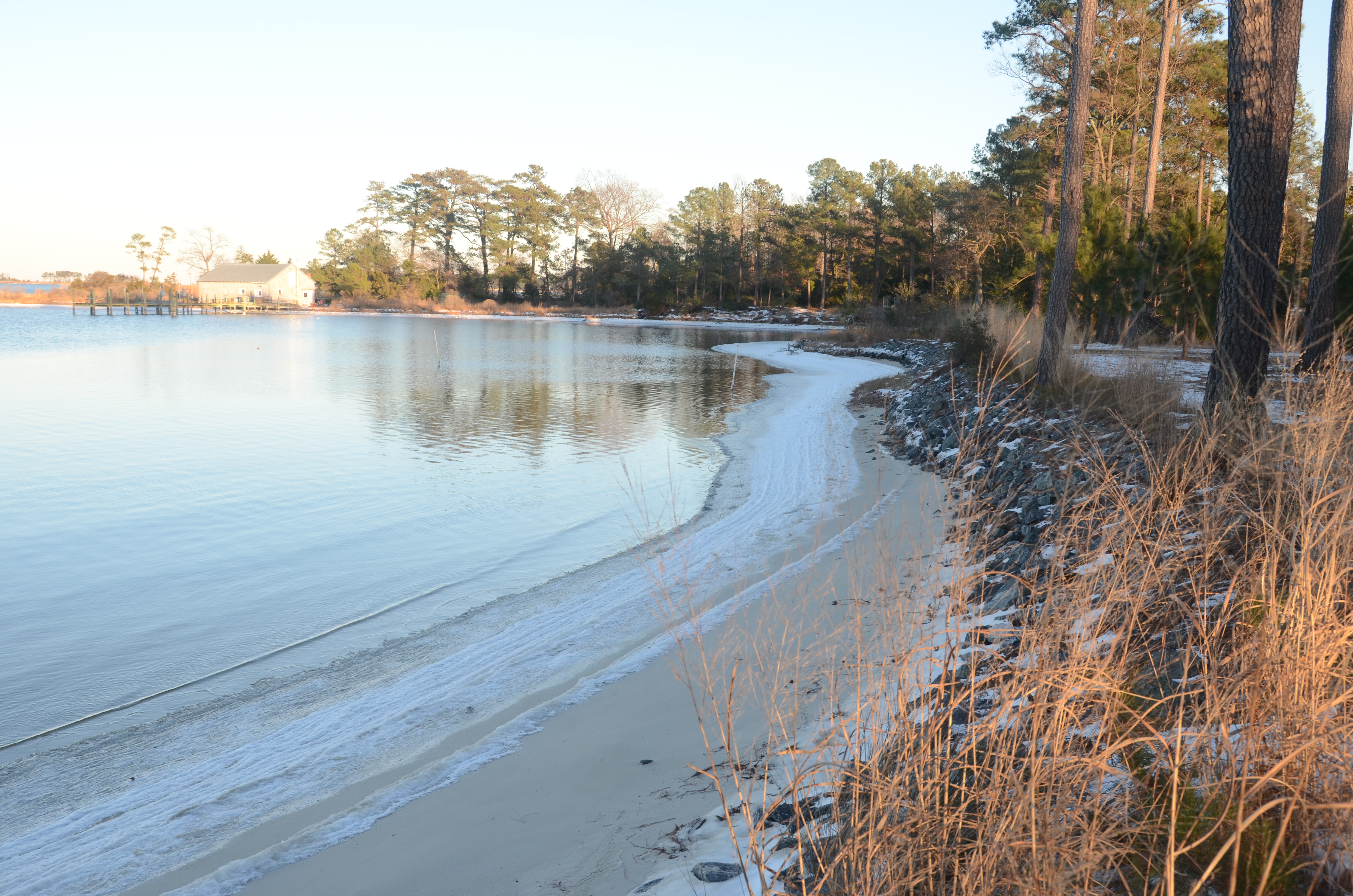
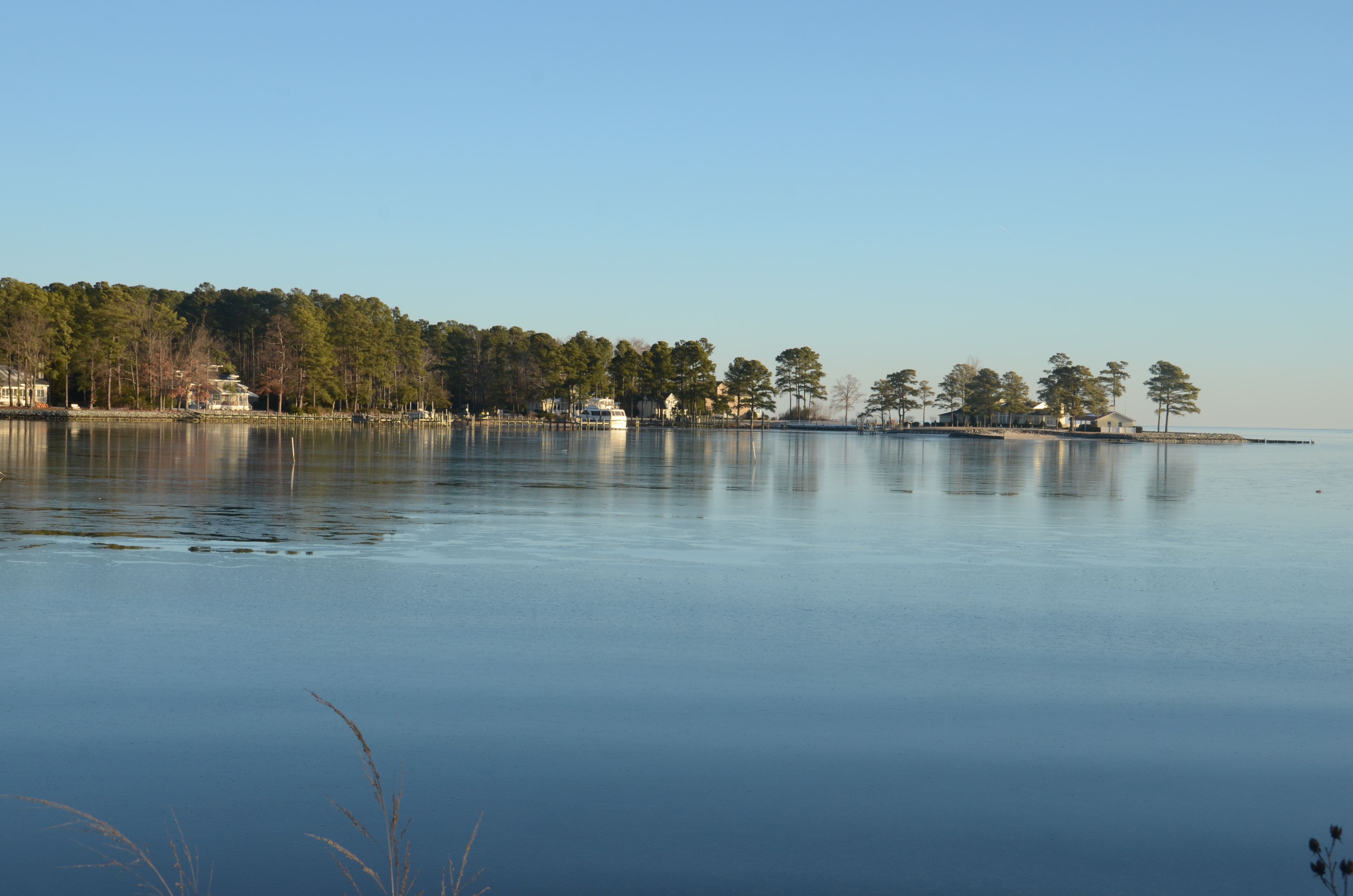
Photo credit: Gary Greenwood
 Chesapeake Bay environment and water quality blog