Uncategorized
Frozen Potomac River
Image Posted on Updated on
The Potomac River was partially frozen over today, here in Northern Virginia.
Chesapeake Bay Watershed Agreement
The Chesapeake Bay Program (CBP) has released their final draft of the Bay Watershed Agreement. The agreement is a result of a partnership between states and the District of Columbia, in the Chesapeake watershed, to protect and restore the Bay. A draft report is published every January detailing goals and expected outcomes for the year to come. CBP allows for public comment from now until March 17.
Chesapeake Bay Program Draft Watershed Agreement 2014
A Snowy Weekend on the Creek
It was a snowy, cold weekend in the Northern Neck. Antipoison Creek and our tidal ponds partially froze over Sunday morning. My family was there to take some photos: 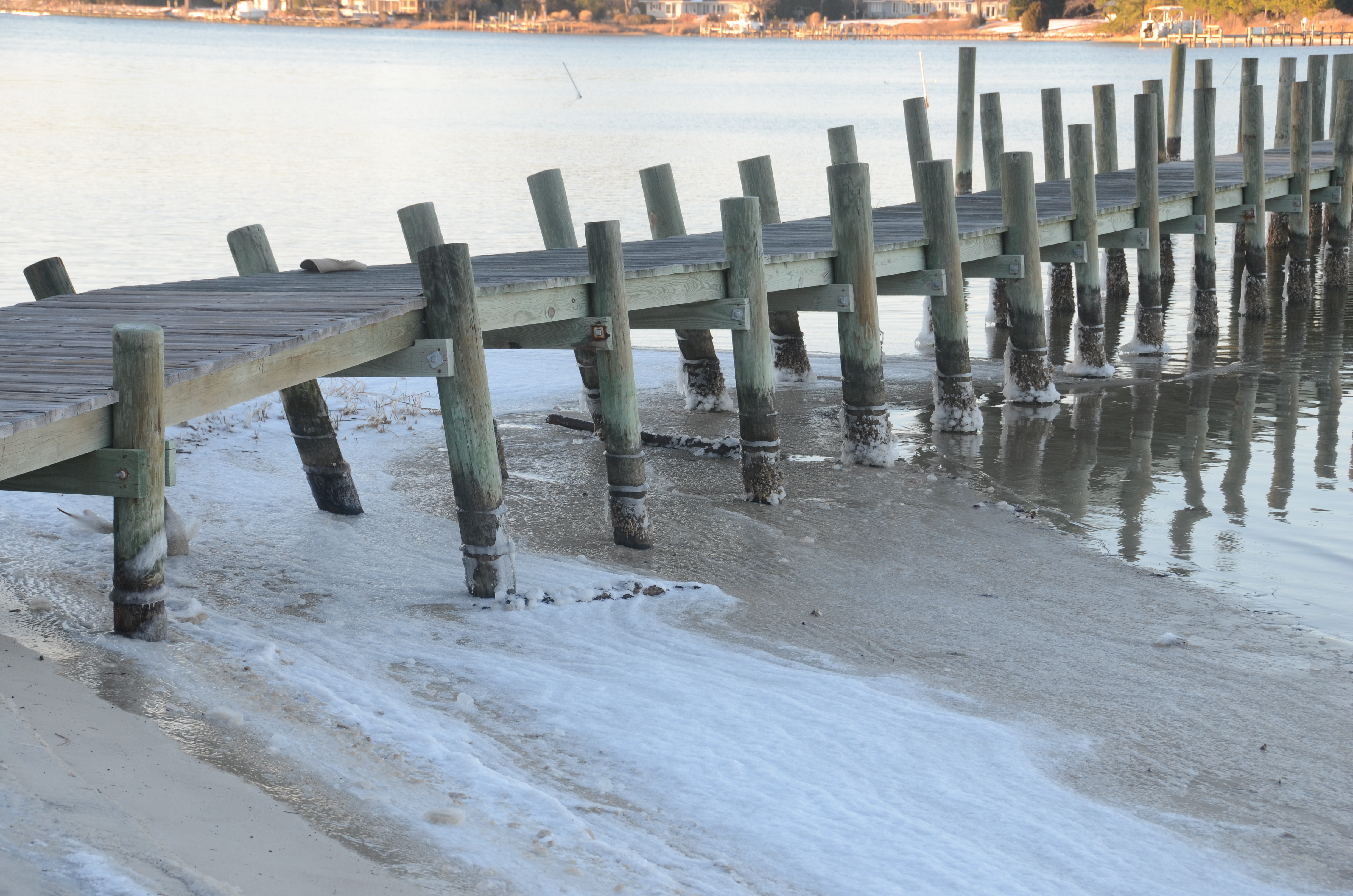

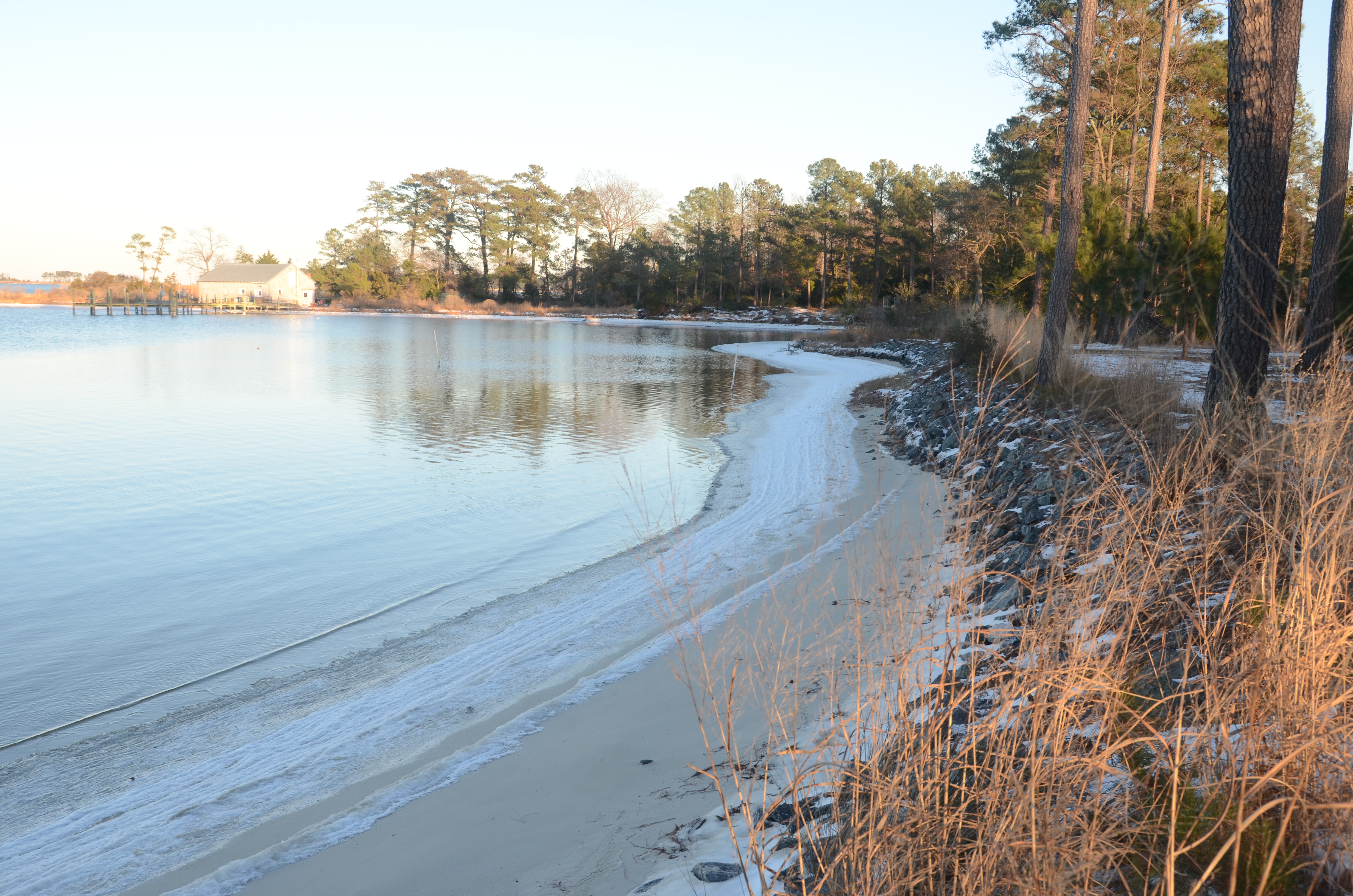
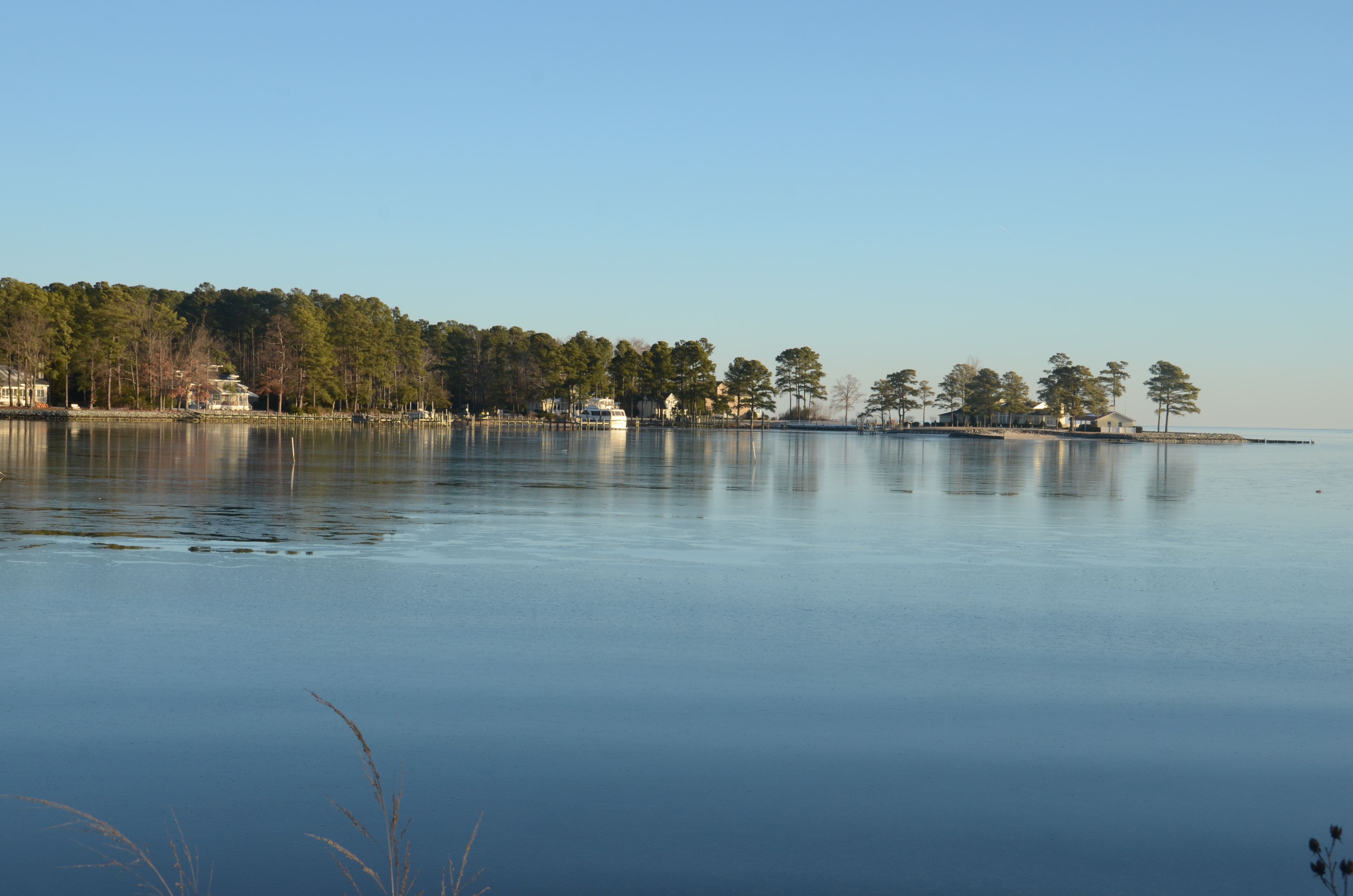
Photo credit: Gary Greenwood
Afternoon Reads
I’m reading a variety of Bay/ environmental news this afternoon:
Virginia Runoff Bill (Bay Daily)
Proposed Natural Gas Line Threatens MD Stream (Bay Journal)
Update on VA Animal Feeding Operation Permits (Bay Journal)
Industry Awakens to Threat of Climate Change (New York Times)
Checking on Earth’s Chimney (B’More Green)
Planting Grasses
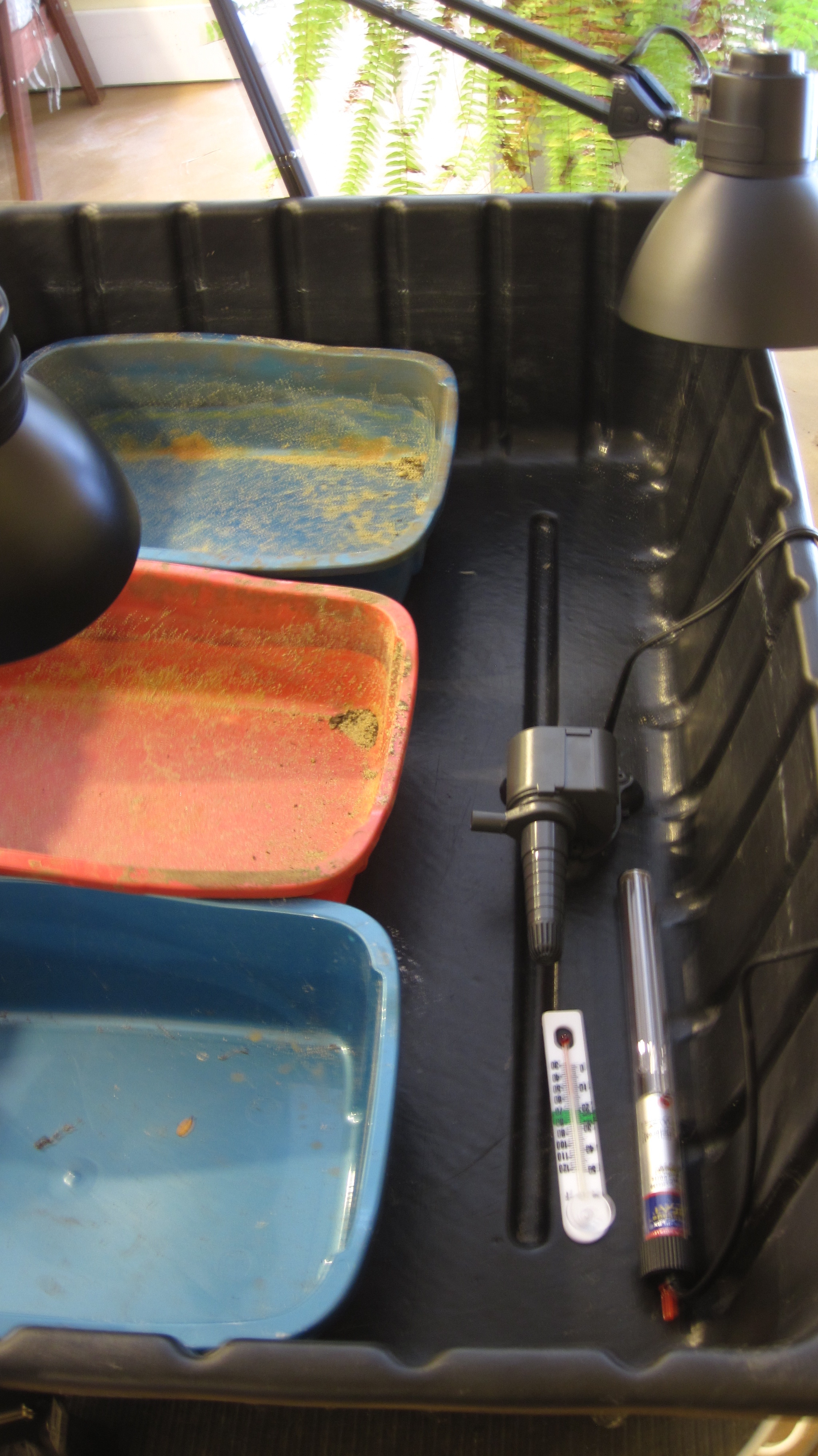
This past weekend I attended the Grasses for the Masses workshop hosted by the Chesapeake Bay Foundation. I received celery seeds and a kit to plant these seeds in my home. I spent the afternoon setting up:
First I found an area in my basement for the project. The kit includes a large black tub, three smaller trays where the seeds will be planted, a water heater, filter and thermometer. I placed the lamps on the sides to provide light for the seeds.

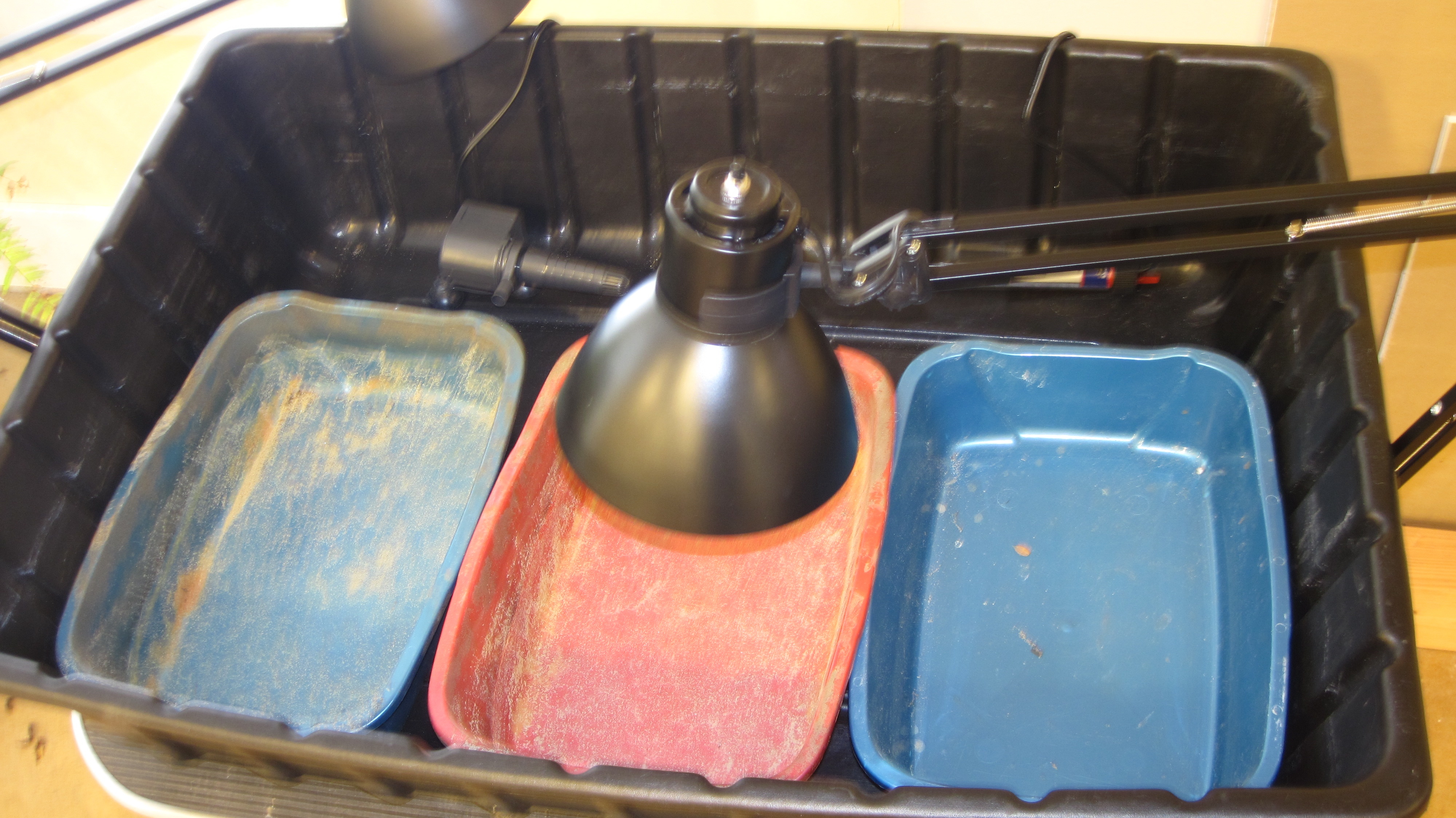
The next step will be to fill the black tub up with water, set up the pump and filter. The water needs to heat up and bubble for 24 hours before the seeds can go in. I’ll use the thermometer to make sure the water reaches 78 degrees F, then I’ll plant the grass seeds in the trays.
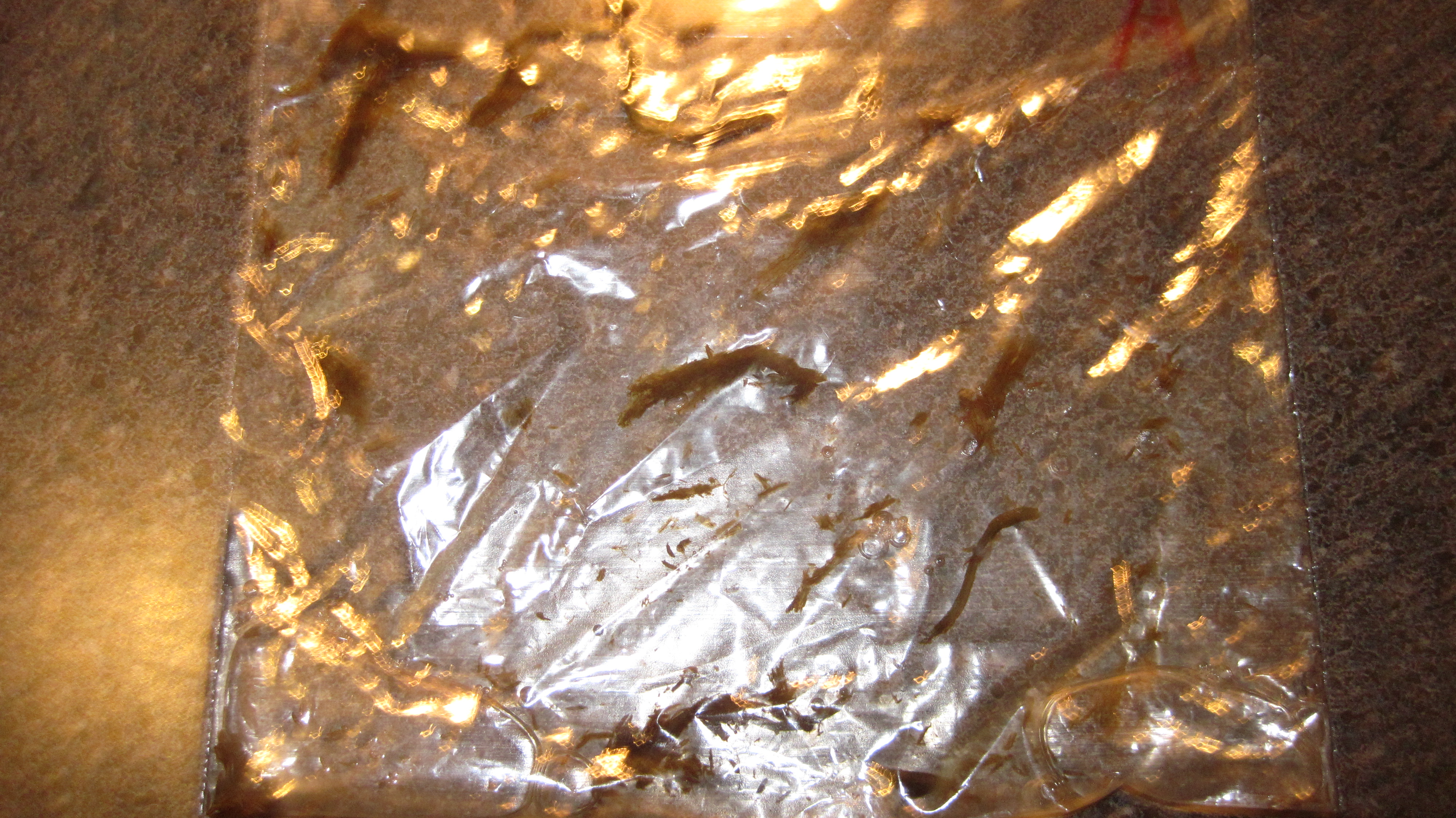
The celery seeds came in a plastic bag, with a little bit of water, and have been sitting in my fridge since the weekend (pictured below). When the water in the tub is ready, I’ll spread sand and the seeds down in the three smaller trays. Aired water and a sand-soil mixture will go over top.
Over the next 2.5-3 months I’ll be monitoring seed growth and water temperature, cleaning out the filter and filling the tub with water. By the end of 10 or 12 weeks I should have grasses ready for planting. I’ll be posting updates as the weeks go by.
The Chesapeake Ray
I heard a piece this morning on NPR on a recent IUCN – the International Union for Conservation of Nature- report on sharks and rays. (NPR). According to the piece, 25% of the world’s sharks and rays are threatened by extinction. This got me thinking about the Chesapeake Bay. I know we have had sharks and rays in the Bay, but I wasn’t sure about their status. What I found was pretty interesting, and fitting, given my piece yesterday on oyster farming:
In the Bay we have the the cownose ray (species name Rhinoptera bonasus). The ray lives in Chesapeake waters from May to October, feeding on molluscs, like oysters and clams.
A 2011 report in the Chesapeake Bay Foundation’s Save the Bay magazine comments on the negative impact rays have on the oyster and seagrass populations in the Bay, (p. 15). Seagrasses and the oyster industry have seen a bit of a comeback after decades of trouble. To protect this growing industry, many in aquaculture called for the ray to be fished or killed off in large numbers.
The 2011 report, “Misunderstood: The Cownose Ray” hazards against overfishing the ray. The species is native to the Chesapeake, and plays an important role in the natural ecosystem. Sometimes the role of a species is not completely understood until it is no longer there to perform it. The article mentions an approach on the West Coast where the aquaculture industry targeted rays to protect their farms. The rays were in fact eating other oyster predators, and when the ray numbers went down, so too did the oyster population.
Scientists argued for more natural solutions to the problem in the Chesapeake region. They called for better management of ray predators (native sharks), the use of oyster cages and other forms of repellent to prevent ray feeding. By touring my neighbors oyster farm, I’ve seen that oysters are grown in cages, perhaps in part because of the ray issue. But I’m curious to find out more- on the ray population today and the species current interaction with aquaculture and underwater grasses. Has anything changed, improved? I’ll be looking for more information in the next few days and sharing what I find.
Underwater Grasses

The Virginia Institute of Marine Science (VIMS) estimates 600,000 acres of underwater grasses were once present in the Chesapeake Bay. As of 2012, the Chesapeake Bay Program estimates a total of 48,191 acres are in the Bay. Since the mid-twentieth century, hundreds of thousands of acres of underwater grasses have been lost. So what does the loss of underwater grasses, or submerged aquatic vegetation (SAVs) mean for the Bay?
SAVs are an important part of the Bay’s ecosystem and provide a number of services. Underwater grasses are a food source for waterfowl; they provide habitat and protection for juvenile blue crabs and several species of fish, such as striped bass and menhaden. Grasses take up nutrients that enter the Bay, improve water clarity and health. The plants provide oxygen to other organisms in the water. They are a buffer against shoreline erosion by reducing the impact of waves and currents on a beachfront.
Strong storms and pollution threaten SAVs. Excess nutrients entering the Bay result(ed) in acres of grasses lost, this century and last. Grasses absorb nutrients, but they can only absorb so much. With large amounts of nitrogen and phosphorous entering the Chesapeake watershed, underwater grasses have been inundated with nutrients, and have dramatically suffered. The decline of aquatic vegetation impacts ecosystem services, local economies and societies. The food industry, and the watermen that rely on the catches of the Bay, have been hit hard in recent years. A decrease in acreage of SAVs contributes to low crab populations, and was cited as a major source of a decline in crab numbers this past year. Fish are at more risk from predation from other species, leaving fewer fish to be harvested by Chesapeake watermen.
Restoration of underwater grasses is one solution to improving water quality and aquaculture, and reducing rates of erosion (or at least is a solution that I can directly play a part in). This weekend I am going to the Chesapeake Bay Foundation’s Grasses for the Masses program, dedicated to planting SAVs in designated areas in the Bay watershed. On Saturday I will attend a workshop where I will receive an aquaculture system with wild celery seeds. After growing the underwater grass in-home for 10-12 weeks, I will plant the wild celery this spring on the Potomac River in Mason Neck State Park, in a second workshop.
While doing this project, I am also looking into the permit process for growing grasses for personal research, off of property in the Northern Neck. I have been looking at VIMS 2012 SAV report and interactive map for more information on the historical presence of grass in this region (VIMS), as well as permit information from the Virginia Marine Resources Commission (VMRC). Updates to follow!
2014-2015 Federal Water Quality Milestones
President Obama signed an executive order for the protection and restoration of the Chesapeake Bay in May 2009. This order brings together groups such as the EPA, USDA, NOAA and other agencies across the Departments of Agriculture, Commerce, Defense, Transportation, Homeland Security, and the Department of Interior. The Committee created by this Order publishes an annual action plan and progress report. The committee has also established goals for water quality to be reached by 2025, with two year milestone reports published in the interim. The 2014 action plan has yet to be released, but the water quality milestones report for 2014-2015 is now available. (Chesapeake Bay Executive Order).
The report is an overview of steps to be made in the next two years broken down by section. The milestone sections include agriculture, atmosphere, stormwater, septic systems, toxins, trading and offsets programs (ie. nitrogen trading), regulatory enforcement, and the EPA’s financial support to the six states and D.C., in the watershed.
I am particularly interested in:
- the 2014 goal to establish State Implementation Plan revisions to reduce NOx emissions (atmosphere)
- the development of stormwater BMPs (stormwater)
- USDA studies on agricultural BMPs and estimates of nutrient/sediment reductions from conservation practices (agriculture)
Friday’s Reads
Judge Rejects Suit Challenging Legality of Nutrient Trading Programs: (Bay Journal)
West Virginia Chemical Spill: (New York Times)
Not technically in the watershed, but an interesting read
Success of Plastic Bag Tax in DC: (The Washington Post)
DC Looking to Ban Styrofoam Containers to Reduce Pollution in Anacostia River: (WAMU)
I live along the Potomac River so I found the following two sources interesting. The Potomac Conservancy releases a report each year looking at habitat, species, pollution, etc. in the Potomac River and gives the watershed a grade. The 2013 report gave the Potomac a C grade. Guest blogger at the American Rivers blog explains why:
Potomac River Report Card: (The Potomac Conservancy)
Potomac River Report Card Explanation: (American Rivers)
A Winter Morning in Virginia’s Northern Neck
Image Posted on

We spent the last weekend of the year at our house at the mouth of Antipoison Creek, in Virginia. Sunday, December 29th saw a cold rain most of the day, clearing late in the afternoon. As seen in the attached picture, Monday saw a colorful sunrise over the Bay. The ochre-colored building is Mike’s oyster house, closed up for the season while the oysters are dormant in their cages and floats. Little Bay is behind the oyster house, and the Chesapeake to the left. Except for some Canada geese and Bufflehead ducks, not much was stirring that chilly morning.
Photo and description by Gary Greenwood
- ← Previous
- 1
- …
- 4
- 5
- 6
- Next →
 Chesapeake Bay environment and water quality blog