The Future of Small Islands in the Chesapeake
Maryland’s Smith Island and Virginia’s Tangier Island, both in the Chesapeake Bay, are rapidly losing land due to sea level rise, erosion and storm damage. I last visited the islands in 2011 for a school field trip. Smith Island seemed to be especially suffering from land loss. Many properties were flooded and front yards covered in standing water. Talking to the residents, many were worried about the rising waters coupled with a disappearing local economy. What little jobs were left revolved around harvesting seafood; most residents have to commute to the mainland for work (Crisfield), while many of the younger generations had moved off the island permanently in search of better prospects.
Tangier Island is struggling with the same land loss issues, although from what I observed, seemed to be a small step ahead of Smith Island. At the time Tangier had a seawall built around the more heavily inhabited part of the island, while Smith Island had no effective means of holding back the encroaching waters. In November of 2012 Tangier was approved state and federal funds to have a jetty built to protect their harbor- a $4.2 million project (source: Washington Post). According to a Bay Journal article released Sunday, Smith Island has recently been awarded funds for a similar project. Smith Island will be getting $15 million from the federal government’s Sandy relief fund. Money will be split between financing a breakwater project, jetty and dock repair on the island. Will the money save these Chesapeake islands from sea level rise and land loss, or is it just delaying the inevitable?
Ancient Oyster Consumption in the Chesapeake Region
I stumbled upon an article from the Smithsonian Environmental Research Center (SERC) on the Native American’s precolonial consumption of oysters that I wanted to share. Researchers from SERC and Natural History have been looking at ancient waste from a Native American tribe- the Piscataway Indians- along the Rhode River (in Edgewater, Maryland on the SERC grounds). These waste piles are filled with broken pottery, artifacts, and oyster shell remains, telling us a little about what kinds of tools were used, and food consumed by local tribe members. Looking at the past 3,200 years, this group of researchers found a 950 year gap, between 800 B.C. to 150 C.E., where no oyster shells dating from that time can be found.
Researchers have several theories about this gap- speculating on a sampling error or a decline in shellfish aquaculture during this time. Sea level rise and the sinking of the land in the Chesapeake Bay watershed may also have contributed to the gap. Waste piles containing missing oyster shells may have been in areas that have eroded or been inundated with water due to sea level rise that has already occurred. Interesting to think how sea level rise in this area impacts historical and anthropological studies, as well as a variety of environmental issues.
The official paper, “Shell Middens, Cultural Chronologies, and Coastal Settlement on the Rhode River Sub-Estuary of Chesapeake Bay, Maryland, USA,” which appeared in Geoarchaeology in August, discusses the methods used to date the remains from the waste piles and goes into more technical detail on plausible explanations for the 950 year gap. I don’t have the access to be able to share the full report here, but there is a nice summary of the findings on the SERC blog.
How much is a polluted Chesapeake Bay costing us?
What are the benefits to cleaning up the Chesapeake Bay? I usually focus on the biological and ecological benefits to watershed cleanup, but the Chesapeake Bay Foundation has been looking at economic benefits. They released a report earlier this month estimating that cleaning up the Bay could result in earnings of $130 billion dollars each year for states in the watershed. On the other hand, failing to enforce pollution diets or follow the 2010 Clean Water Blueprint, will result in billions of lost dollars in the region.
The report estimates the economic benefits from watershed cleanup and regulation will improve recreational opportunities; support local businesses, restaurants and watermen; and reduce risks associated with flooding, air pollution and climate instability. The report looks at the savings possible for each state involved, and for the overall watershed.
In the News
There have been a variety of stories in the news lately on the Chesapeake Bay watershed. I’ve picked out some of the ones I’ve been reading to share:
From Delaware Online: The Federal Energy Regulatory Commission approved the export of liquefied natural gas from Dominion Energy’s Cove Point facility on the Bay. Natural gas will likely begin to be exported from this location starting in 2017, and be carried via ships to Japan and India. Many environmentalists remain opposed to this plan, citing concerns over the extraction, processing and shipping of natural gas.
From CBS Baltimore: Baltimore County has allocated $13 million to clean up White Marsh Run, a tributary of the Chesapeake Bay. Flooding and erosion result in frequent bursting of sewage pipes, sending sediment and waste downstream into the Bay. The funds will allow for construction crews to rebuild the stream and relocate the sewage pipes.
From the Washington Post: Journalist Darryl Fears highlights the recent return of sturgeon, decline of rockfish, and the rise of the invasive water chestnut grass to the Bay and its tributaries.
Grant Funds Awarded to Chesapeake Bay Restoration Projects
The National Wildlife Foundation’s Chesapeake Bay Stewardship Fund has awarded $9.8 million to various environmental projects in the Bay watershed. These projects aim to reduce pollution, improve water quality, and restore wetlands and forest buffers. Individual projects include the installation of rain gardens in the District, and storm water management programs in Virginia.
Update on Oyster Gardening Project
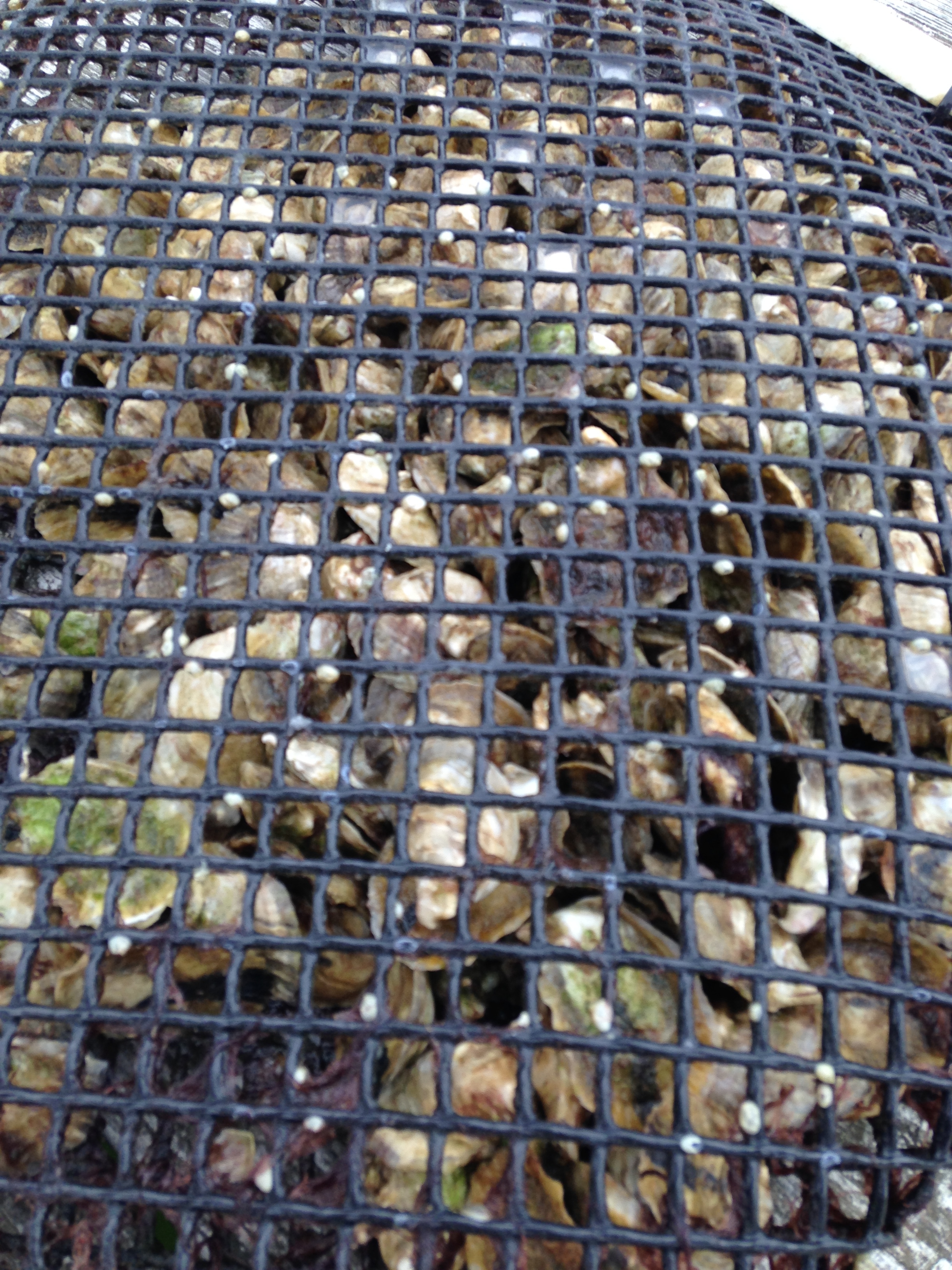
In a previous post I mentioned that I had started an oyster garden in early July. The oysters were purchased from a party that grows oysters from seed (from the hatchery) until the animals reach roughly the size of a quarter. I got a bag of 300 of these quarter-size oysters, and put them in a sealed mesh bag that I placed inside of an oyster float. In the two months since I started the garden, the oysters have grown about an inch. Some oysters are larger than others. Because a few were still not big enough to be placed directly into the float, all of the oysters were kept in the mesh bag, where they will continue to grow for a few more weeks.

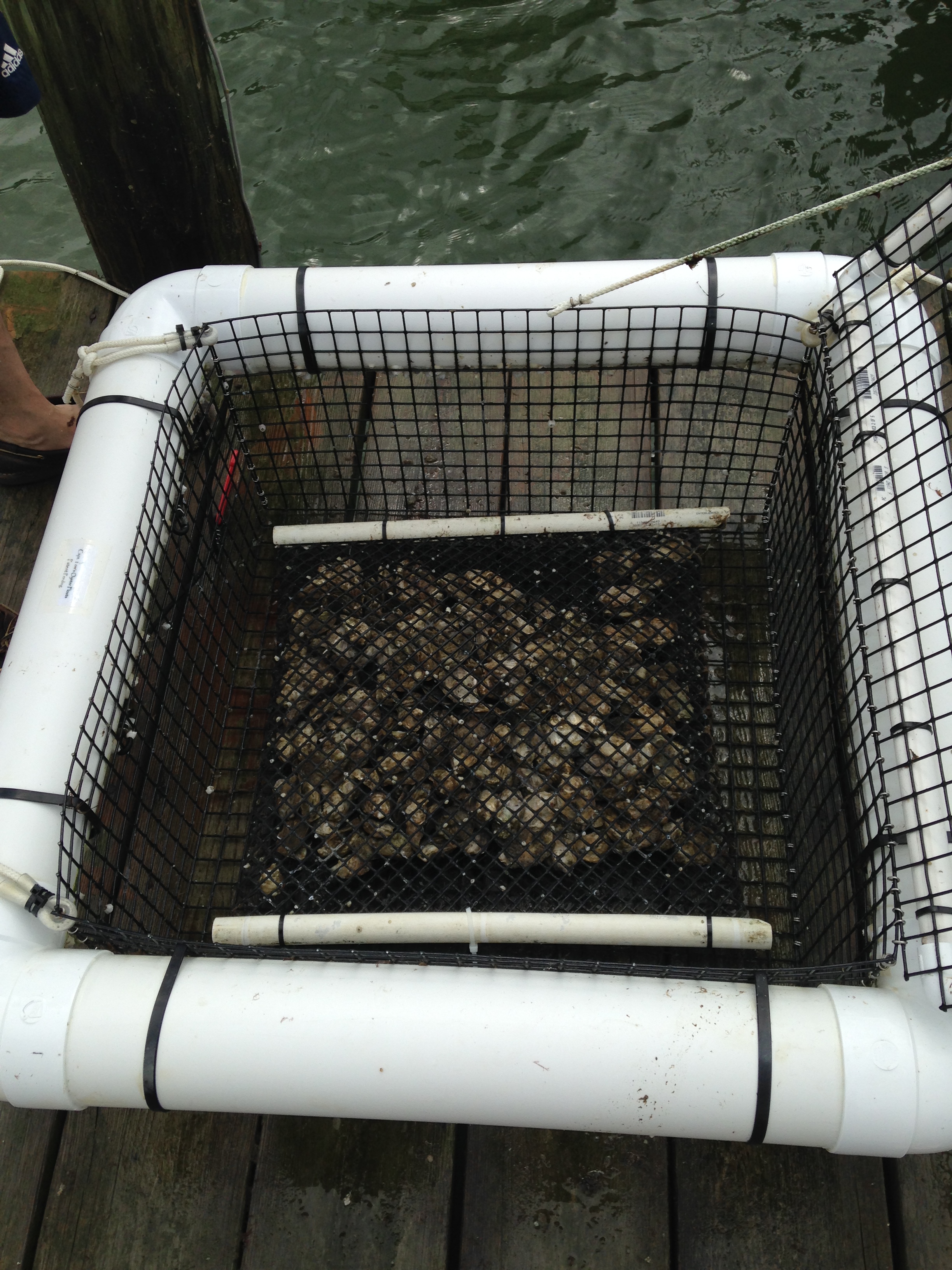
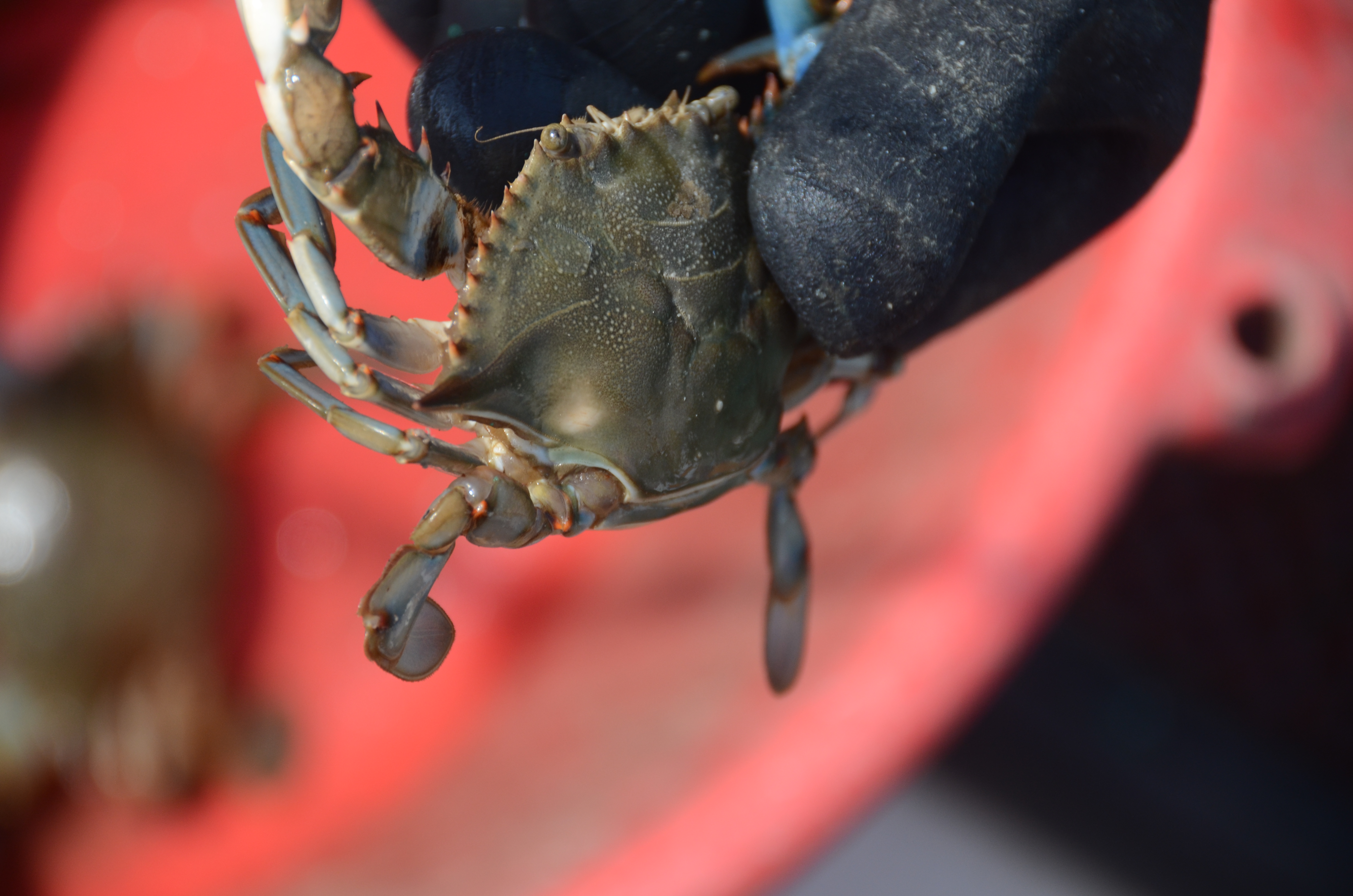
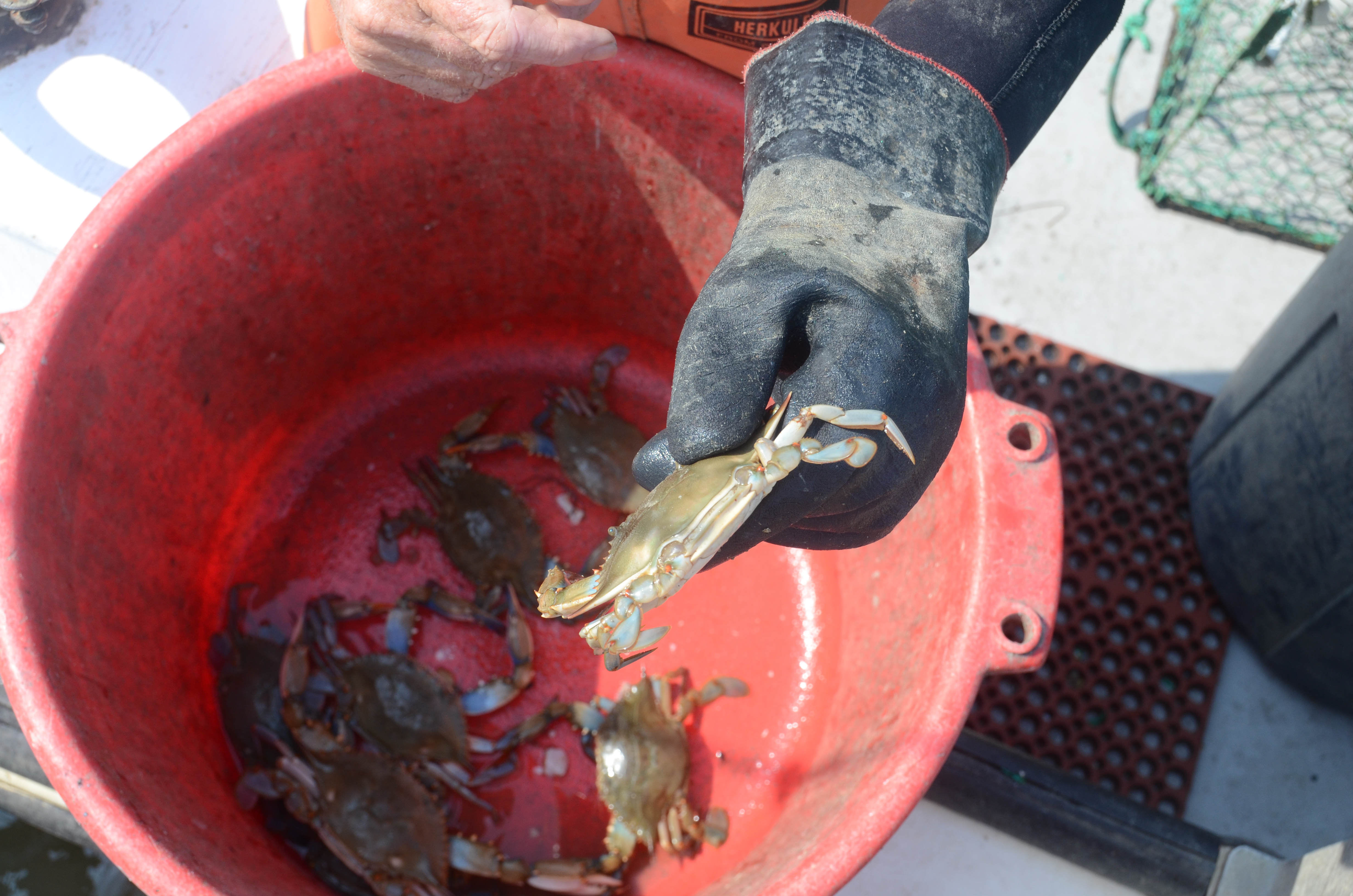
When the float was brought up for cleaning most recently, there were three blue crabs that had to be removed. Blue crabs prey on the oysters and in fact, 14 from my batch had been pried open and left for dead, presumably by crabs (oysters pictured below).


The oysters will go dormant and stop growing in the winter months, as the water temperatures fall. The oysters need to grow at least another inch- until they reach 3 inches- to be edible, likely around late next summer or early fall. For now, they are doing their part to filer water in the creek and improve water quality.
Osprey Used as Indicators for Environmental Hazards
Spend a day on the Chesapeake Bay and you’ll see osprey all around- nesting on channel markers, diving for fish in the water, and flying above your head. These birds are common to the Chesapeake Bay, and live near bodies of water across the globe. Some 40 years ago, a sighting of an osprey in the Bay would have been much rarer.
Osprey were endangered in North America throughout the 1940s, 50s and 60s with the widespread use of DDT as a pesticide. By 1975, species numbers had fallen by 90% on our continent. DDT was the cause for this decline, as it harmfully impacted osprey eggs; the birds were laying eggs that were not hatching, or had shells so thin that they broke during incubation. The use of DDT for agricultural purposes was eventually banned in 1972, and since the phaseout of DDT, osprey have had an incredibly successful comeback in North America.
Although DDT is no longer a threat to osprey, there are a number of other chemicals and contaminants that humans use and dispose of that make their way into the osprey’s food chain. I read an article from Environmental Health News that discusses some of the other threats facing osprey today. The article, “Osprey whisperers: Deciphering decades of clues from the sea hawk,” talks about how osprey respond to contaminants they ingest. The author uses several examples of the effect of contaminants on osprey in different regions, including the discharge of prescription drugs into the Chesapeake Bay. Osprey, which eat fish, are at the top of their food chain. Pollutants found in the waters where osprey live bioaccumulate in the food chain, and can have serious impacts on these bird’s reproductive and migratory habits. The article points out that examining how osprey are affected by what they eat can be indicators for their health as well as human health. Often, what is damaging to these birds, can be damaging to humans, if ingested or exposed to certain chemicals at high enough levels.
I encourage you to take a look at this article, which I’ve linked to above. I found this particular piece through a post on the New York Times Dot Earth blog, where the author looks at the many ways birds can warn us about the health of our surrounding environment (“Winged Warning: Heavy Metal Song Distortion“).
Bay Dead Zones
Dead zones and algal blooms tend to be especially bad in the Bay over the summer months. Dead zones are areas where excess nutrients in the water- nitrogen and phosphorus runoff from human activity- create oxygen depleted underwater areas, where fish and other aquatic organisms find it difficult to survive. Algal blooms occur in waters with excess nutrients. The blooms block sunlight to submerged aquatic vegetation. Underwater grasses cannot grow and survive in these conditions, and cannot provide food or shelter for a number of reliant species.
Scientists predicted in June that there would be an above-average dead zone in the Chesapeake Bay this summer. There is good and bad news on that front. In July, the Bay’s dead zone was the smallest recorded in 30 years, according to the Capital Gazette. Hurricane Arthur and cooler than average temperatures in July were likely the main factors. However, it is predicted that this trend will not last through August. Warmer temperatures, and the spread of algal blooms already spotted in the Bay and its tributaries will lead to more serious conditions later this summer.
Related News:
-Researchers at William and Mary, and the Virginia Institute of Marine Science (VIMS), are working on an algae biofuel initiative, which harvests algae as fuel, and takes up excess algae and nutrients in the water that create dead zones and harmful blooms. There is an interesting article in the Biomass Magazine, which goes into more detail on this project.
–The Chesapeake Bay Program recently published a photo essay that documents how researchers at the University of Maryland Center for Environmental Science (UMCES) record dead zones in the Bay. UMCES uses a research vessel to go out to the deepest parts of the Bay and perform a number of tests, including the measurement of dissolved oxygen levels.
Virginia Watermen Propose Changes to Blue Crab Management in Chesapeake Bay
In Virginia there is a Blue Crab Industry Panel, a group of 15 commercial watermen, that provides input on crabbing and relevant regulations to the Virginia Marine Resources Commission (VMRC). Given the current depleted state of crabs in the Chesapeake, this panel of watermen is calling on the VMRC to impose stronger regulations on the culling of blue crabs, then the agency passed earlier this summer.
The VMRC cut limits for the culling of blue crabs by 10% in June, and instituted these changes for all commercial crabbers. The Virginia Blue Crab Industry Panel wants the VMRC to impose individual harvest limits for crabbers, rather than enforce regulations based on seasons or daily catches. In addition, the panel calls on the VMRC to put forward more scientific information on natural threats to crabs and recreational crab harvests. The panel wants the agency to institute a more efficient reporting system to increase accountability for crab harvests, and calls for an economic analysis looking at the costs and benefits of current regulations, and any that may be enacted in the near future.
According to a press release issued by the Virginia Blue Crab Industry Panel, these recommendations mirror management plans that allowed rockfish to return to sustainable levels in the Bay, and focuses on long-term solutions to the crab population problem, rather than short-term “Band-Aid fixes.”
The press release can be found at Vacrabbers.com, and their full proposal here: Virginia Blue Crab Industry Panel Priority Recommendations


Oyster Gardening on Antipoison Creek
Early last month I started growing oysters off of the dock at the house on Antipoison Creek. The oysters came out as seed from Oyster Seed Holdings, LLC, a hatchery on Gwynn’s Island, Virginia, and were raised by a third party, Oyster Mama’s Bay-Bies, until they reached the size of a quarter. I have 300 oysters growing in a bag inside of an oyster float off of the dock. The oysters will stay in the bag until they grow big enough to float in the cage by themselves.
Oyster gardening is pretty low maintenance. The cage and bag need to come out of the water every week or two to be cleaned. The cage needs to be checked just as often to make sure no predators, like blue crabs, are inside, eating the oysters.
The oysters will go dormant over the late fall and winter as the water temperatures drop. This batch will be ready for eating hopefully by early next fall, when they grow to be at least 3 inches long. (I have triploid oysters, which usually reach maturity in 18 to 24 months.) Until then, the oysters are doing their part to clean the Chesapeake Bay- each one filters up to 50 gallons of water a day!


 Chesapeake Bay environment and water quality blog